Screen Time Guidelines for Kids: A Single Parent Survival Guide
Key Takeaways
Screen time guidelines for kids can feel impossible for single parents. Learn realistic limits, age-appropriate rules, and how to manage media exposure alone.
Screen Time Guidelines for Kids: A Single Parent Survival Guide
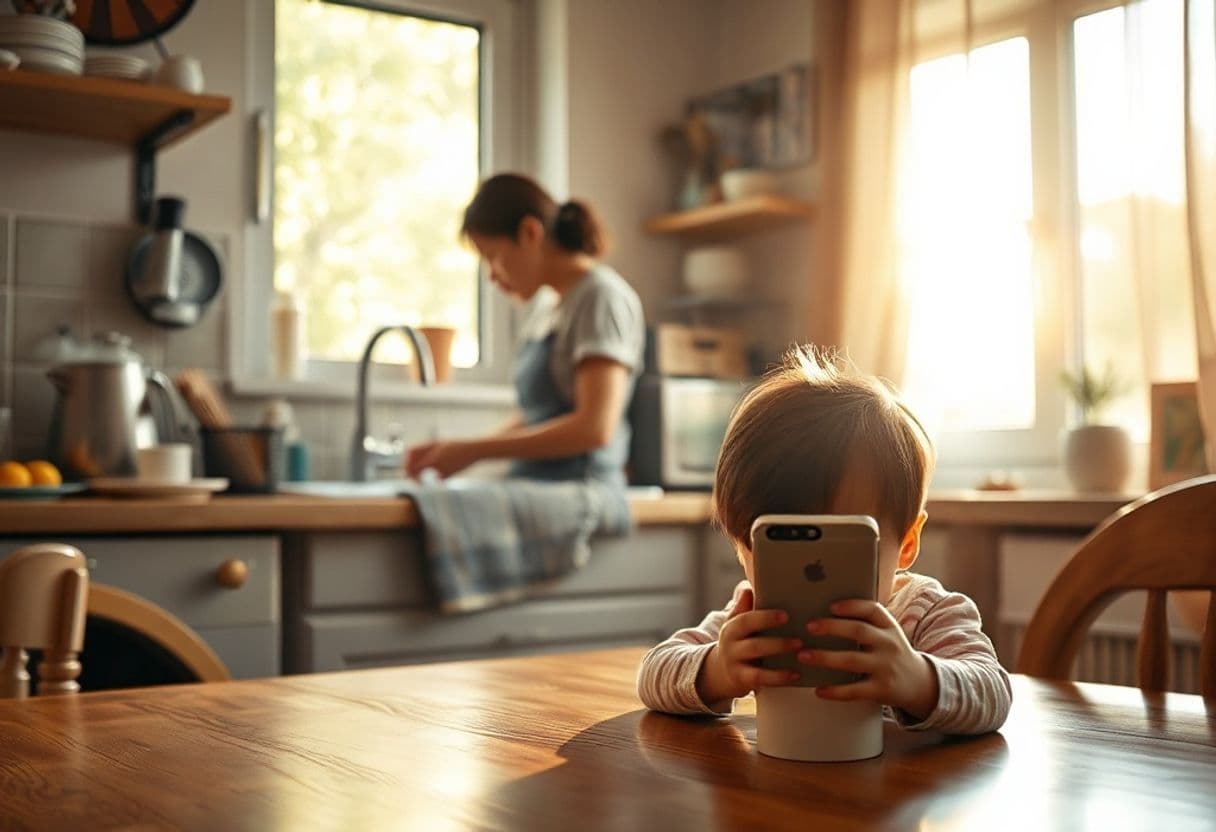
Parents who strictly forbid all digital devices until middle school and parents who allow unlimited tablet use to keep the peace often end up with very different results, yet both groups are usually motivated by the same desire to do what is best for their families. One group fears the developmental impact of blue light and dopamine loops, while the other is simply trying to survive the relentless demands of modern life without a backup caregiver. This tension is particularly acute for single parents, where the screen often serves as the only available 'babysitter' when a meal needs to be cooked or a work call must be taken. Finding a middle ground that respects developmental milestones while acknowledging the reality of solo parenting is not just a goal; it is a necessity for household sanity.
A Note on Professional Advice
Please note that the information provided in this article is for general educational purposes only. I am a parent sharing my experiences and researched strategies, not a medical professional, developmental psychologist, or pediatrician. Every child is unique, and what works for one household may not work for another. You should consult with a qualified pediatrician or child development specialist to create a specific plan tailored to your childs health and developmental needs.
The Reality of Solo Parenting and the Digital Babysitter
I remember a specific Tuesday evening about three years ago that perfectly encapsulates the struggle of managing media exposure alone. My 4-year-old was going through a phase of extreme separation anxiety, and my 7-year-old was struggling with a math assignment that seemed designed to frustrate everyone involved. I had been through a grueling six-month period where the younger child woke up every single night at 2:00 AM, and I was operating on what felt like a permanent fog of sleep deprivation. I needed to cook dinner, but I also needed twenty minutes of silence to keep my own temper from fraying.
I handed the 4-year-old an iPad and let the 7-year-old watch a cartoon. For thirty minutes, the house was quiet. I felt a crushing sense of guilt, remembering every article I had read about how 'passive screen time' was rotting their brains. But in that moment, the screen was the only thing preventing a total household meltdown. That evening taught me a vital lesson: parenting advice that sounds perfect in a textbook often falls apart when you are the only adult in the room. The key insight was that screen time is not a moral failing; it is a tool. Like any tool, its impact depends entirely on how, when, and why it is used.
As a single parent, you do not have the luxury of a partner to take the kids to the park while you shower. You do not have someone to handle the 'digital policing' while you handle the laundry. This means your approach to media must be sustainable. If a rule is so strict that it causes you more stress to enforce than the benefit it provides, it will eventually fail. We have to move away from the idea of 'perfection' and toward a model of 'intentionality.' This means being honest about when we are using screens for our own survival and ensuring that the content being consumed during those times is as high-quality as possible.
Why is screen time management different for single parents?
Managing media exposure in a single-parent household presents unique challenges that two-parent households may not fully grasp. When you are the sole provider of attention, discipline, and logistics, the screen often becomes an essential utility. It allows you to complete high-risk tasks—like boiling water for pasta or taking a 10-minute professional call—without a toddler underfoot. However, the lack of a second adult also means there is no one to provide a 'counter-balance' to screen use through physical play or conversation while you are busy.
Data from the Pew Research Center in 2020 indicated that nearly 70% of parents feel that parenting is harder today than it was 20 years ago, with technology being a primary reason. For a single parent, this difficulty is doubled. You are the one who has to set the password, the one who has to monitor the history, and the one who has to endure the 'techno-tantrum' when the device is turned off. Without a partner to help transition the child to a different activity, the emotional labor of ending screen time falls entirely on you.
Furthermore, single-parent homes often operate on a tighter schedule. There is less 'flex time' for long, slow transitions. If you have to get both kids out the door by 7:30 AM, and the TV is the only thing that gets them to sit still while you brush their hair, you are going to use it. The goal is to acknowledge these realities without letting the screen become the default state of the household. It is about using the 30-40 minutes of screen time strategically so that the rest of your time together can be high-quality and screen-free.

What are the recommended screen time limits by age?
While every family is different, the American Academy of Pediatrics (AAP) provided updated guidelines in 2016 that remain a benchmark for many health professionals. These guidelines emphasize that for very young children, the human interaction that occurs *around
- the screen is more important than the screen itself.
Guidelines for Children Under 2 Years Old
For children younger than 18 months, the recommendation is generally to avoid screen media other than video chatting. Research has shown that infants and toddlers have a 'video deficit,' meaning they do not learn from a 2D screen the same way they learn from a 3D person. For children aged 18 to 24 months, if you want to introduce digital media, it should be high-quality programming, and parents should watch it with their children to help them understand what they are seeing.
- Statistic: According to a 2017 study published in JAMA Pediatrics, for every 30-minute increase in daily screen time, there was a 49% increased risk of expressive speech delay in toddlers.
- Example: Instead of leaving a 20-month-old alone with a tablet, a single parent might set the tablet on the kitchen counter while they wash dishes, narrating what is happening in a high-quality educational program to make it an interactive experience.
Guidelines for Children Aged 2 to 5 Years
For children in this age bracket, the recommendation is to limit screen use to 1 hour per day of high-quality programming. This is the age where 'co-viewing' remains critical. In a single-parent home, this is often the hardest stage because this is when children become most demanding of your time.
- Warning: Avoid using screens as the only way to calm a child down. If a child only learns to regulate their emotions through a screen, they may struggle to develop internal self-regulation skills.
- Specific Number: Limit total daily exposure to 60 minutes, ideally broken into two 30-minute sessions to prevent overstimulation.
Guidelines for School-Aged Children (6 and older)
For older children, the focus shifts from strict hourly limits to ensuring that media use does not displace essential activities. This includes 8-10 hours of sleep, at least 1 hour of physical activity, and time for homework and face-to-face social interaction.
- Example: A 7-year-old might be allowed 45 minutes of gaming after their homework and chores are finished, but the console is kept in a common area rather than the bedroom.
- Observation: In my experience, children who have a clear 'checklist' of responsibilities to complete before accessing screens are much less likely to argue about the limits.
How to transition away from screens without a meltdown?
As any single parent knows, the hardest part of screen time is not turning it on; it is turning it off. When you are alone and trying to manage a household, a child screaming because their show ended can feel like the final straw. However, there are practical ways to make this transition smoother without needing a second adult to intervene.
Use Visual and Auditory Cues
Children often have a poor sense of time. Telling a 5-year-old they have 'five minutes left' is meaningless. Use a physical kitchen timer or a visual timer app where they can see the red section getting smaller. This gives them a tangible sense of the approaching end. I have found that giving a 10-minute, 5-minute, and 1-minute warning reduces the shock of the transition.
The 'One More' Rule
Instead of ending a show in the middle of a scene, try to end it at a natural stopping point. Tell the child, 'You can watch one more episode' or 'You have two more levels in this game.' This allows the child to feel a sense of completion, which makes it easier for their brain to switch gears.
Bridge to the Next Activity
Don't just turn off the TV and leave the child in a vacuum. Provide a 'bridge' to the next task. For example, 'When the timer goes off, we are going to go to the kitchen and you can help me put the toppings on the pizza.' By giving them something to look forward to, the loss of the screen feels less like a punishment and more like a transition to a new phase of the day.
Building a sustainable media plan for your household
Creating a 'Family Media Plan' is a strategy recommended by many developmental experts to take the guesswork out of daily decisions. For a single parent, this plan acts as your 'silent partner.' When the rules are written down and agreed upon in advance, you don't have to be the 'bad guy' every day; you are simply enforcing the plan that everyone already knows.
Identifying Screen-Free Zones and Times
Establishing clear boundaries about where and when screens are allowed can solve many arguments before they start.
The Dining Table: Make meals a screen-free time for both you and the children. This is the best time for the 'face-to-face' interaction that balances out the day.
The Bedroom: Keep all screens out of bedrooms, especially at night. The blue light from screens can inhibit the production of melatonin, making it harder for children to fall asleep. Given that I survived six months of sleep deprivation, I can tell you that anything that interferes with a childs sleep is a risk not worth taking.
30 Minutes Before Bed: Turn off all electronics at least 30 to 60 minutes before the scheduled bedtime. This allows the childs brain to wind down naturally.
Choosing Quality Over Quantity
Not all screen time is created equal. Watching a slow-paced educational program is vastly different from playing a high-intensity, ad-filled mobile game.
- Warning: Be wary of 'autoplay' features on platforms like YouTube. These are designed to keep children watching indefinitely and can lead them into inappropriate content very quickly.
- In Practice: Use apps like PBS Kids or specific streaming services that allow you to create a curated 'playlist' for your child. This prevents the 'rabbit hole' effect where one video leads to another unrelated, lower-quality video.

Common Mistakes to Avoid in Screen Management
Even with the best intentions, it is easy to fall into traps that make screen management harder in the long run. Here are three common mistakes I have observed and made myself:
Using screens as a reward for eating: If you tell a child they can watch a show if they finish their broccoli, you are creating a psychological link between food and digital stimulation. This can lead to mindless eating habits later in life. It is better to keep mealtime and screen time entirely separate.
Being inconsistent with the rules: If you allow two hours of TV on Tuesday because you are tired, but strictly limit it to 20 minutes on Wednesday, the child will constantly 'test' the boundary to see which version of you they are going to get. Consistency is the single parent's best friend. It is better to have a slightly more relaxed rule that you can actually stick to every day than a strict rule you break twice a week.
Ignoring your own screen use: Children are expert observers. If I am telling my 7-year-old to put away their tablet while I am scrolling through my phone at the dinner table, the message is lost. We have to model the behavior we want to see, even when we are exhausted and just want to scroll through social media for five minutes.
Conclusion
Managing screen time as a single parent is about finding the balance between developmental ideals and household reality. It requires moving away from guilt and toward a strategy that supports both the childs growth and the parents mental health. By setting clear boundaries, choosing high-quality content, and being consistent with transitions, you can ensure that technology remains a helpful tool rather than a source of constant conflict.
Summary of Key Points
- Intentionality over Perfection: Use screens strategically during high-stress times of the day rather than as a constant background presence.
- Age-Appropriate Limits: Follow the general guidelines of no screens under 18 months, 1 hour for ages 2-5, and a balanced approach for school-aged children that prioritizes sleep and physical activity.
- Consistent Transitions: Use visual timers and 'bridge' activities to help children move away from screens without emotional meltdowns.
Action Step for Today
Identify one 'high-risk' time of day where you usually rely on screens (such as while you are making dinner) and set a specific timer for that session today. Once the timer goes off, commit to a 5-minute 'bridge' activity with your child, such as a quick game or helping with a simple chore, to help them transition back into the physical world.
Previous
Public Childcare Centers: How to Apply and Secure a Spot
Next
Screen Time Guidelines for Kids: A Single Parent Survival Guide
More in Parenting

A Working Parent's Guide to Children's Eye Care: Protecting Your Firstborn's Vision
A practical guide for busy working parents on protecting their firstborn's vision. Learn how to spot early warning signs, set up healthy home lighting, and build simple routines.

Is It Puberty Rebellion or Teen Anxiety? A 2-Week Guide for Exhausted Parents
Unsure if your teenager is going through normal puberty or experiencing deep emotional anxiety? Discover the 2-week observation method and a daily 5-minute checklist.

Childhood Hives Causes and Management for School-Aged Kids
Childhood hives can be triggered by stress, temperature, or infection. Learn how to manage triggers and decide when your child is ready for school or daycare.

Side Dish Refusal in Toddlers: Strategies for Multi-Child Homes
Learn why children refuse side dishes after a second baby arrives and how to manage picky eating with age-specific strategies and consistent mealtime routines.