Infant Development Checklist: Your Guide to Baby's First Year

Key Takeaways
Explore an infant development checklist for your baby's first year. This general guide helps parents observe milestones, not for diagnosis. Consult a pediatrician.
Infant Development Checklist: Your Guide to Baby's First Year
The short answer is: an infant development checklist can be an incredibly helpful tool for parents during their baby's first year, offering a general roadmap of expected milestones. Here's why: it provides a framework to observe and understand your baby's progress, but it's crucial to remember that it's a guide, not a rigid set of rules. Every baby is unique, and their developmental journey unfolds at its own pace. This information is intended for general knowledge and educational purposes only, and does not constitute medical advice. Always consult with a qualified healthcare professional for any health concerns or before making any decisions related to your baby's health or care.
Why Are Infant Development Checklists So Helpful for Busy Parents?
I vividly remember the early days with my firstborn. I was a brand-new mom, trying to navigate a world of conflicting advice, sleepless nights, and the overwhelming joy of a new baby. I found myself constantly wondering if my baby was 'on track.' Was he smiling enough? Should he be rolling over by now? Why wasn't he babbling like the baby in that parenting book? The anxiety was real.
Then came my second child, followed by my third, who is now 18 months old. Each of them has been wonderfully, distinctly different. My eldest was an early talker but took his sweet time with crawling and walking. My middle child, on the other hand, was a gross motor wizard – crawling at 6 months, walking by 9 months – but didn't utter more than a few words until well past his first birthday. My youngest is currently a whirlwind of energy, motor skills developing rapidly, but still preferring gestures to words for many things. If I had rigidly applied the same checklist expectations to all three, I would have spent their entire infancy in a state of worry.
This personal experience taught me a profound lesson: while infant development checklists are valuable, their true utility lies in guiding observation and facilitating conversations with your pediatrician, rather than serving as a pass-fail test. They offer a general sequence of development, highlighting key areas like gross motor skills (large movements), fine motor skills (small, precise movements), language development, social-emotional growth, and cognitive abilities. Understanding these broad categories helps you notice patterns, celebrate progress, and identify when a professional check-in might be beneficial.

What Milestones Should Parents Look For in the First Year?
Navigating your baby's first 12 months involves observing a beautiful progression of skills. While precise timing varies, here's a general overview of what many babies achieve:
Birth to 3 Months: The World of Reflexes and Early Connections
In these initial months, much of your baby's movement is reflexive, but purposeful actions quickly emerge. They are learning to connect with you and their environment.
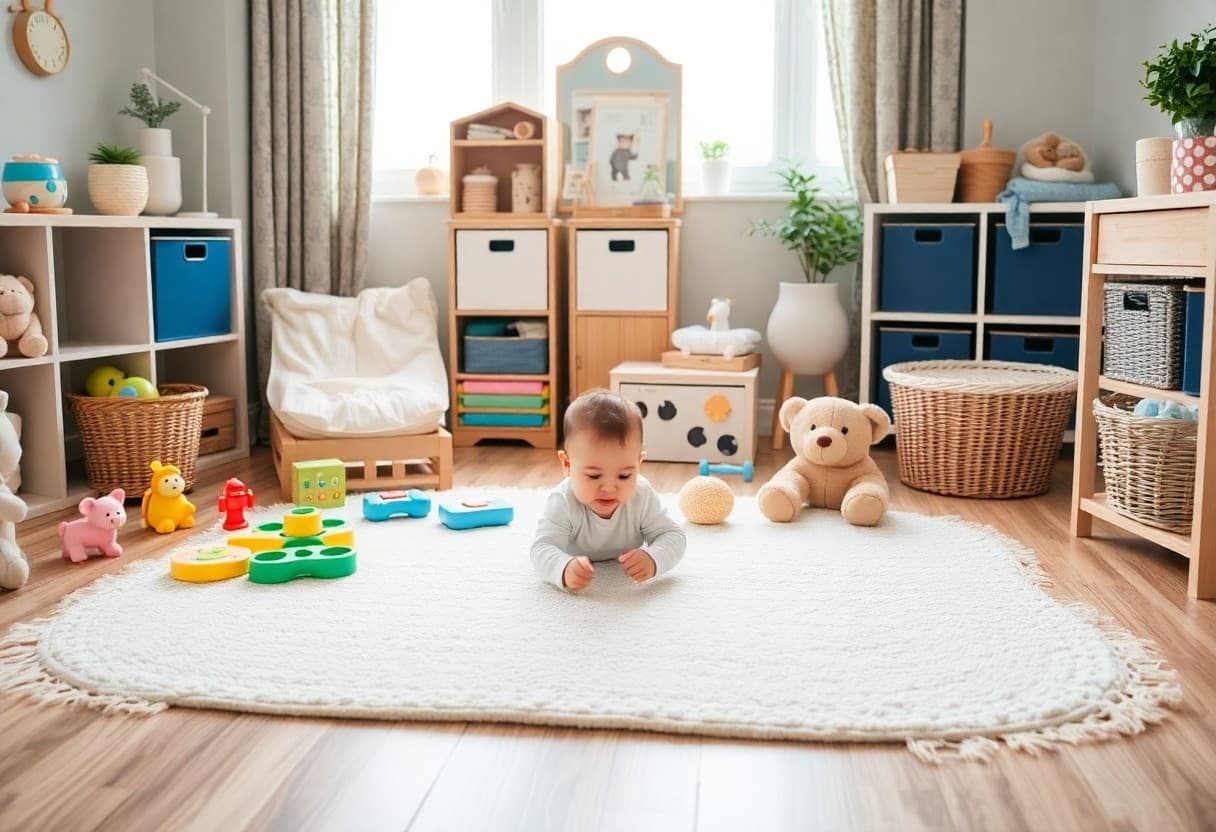
- Gross Motor: By 2 months, many babies can briefly lift their head during tummy time. By 3 months, they often push up on their forearms and hold their head steady when supported. For example, my 18-month-old, when he was just 2 months, would gaze intently at toys during tummy time, trying hard to lift his head, even if only for 5-10 seconds at a time.
- Fine Motor: They'll start bringing hands to mouth and grasp objects placed in their hand.
- Language: Crying is the primary communication, but cooing and gurgling sounds start appearing, especially when talked to.
- Social-Emotional: They begin to smile spontaneously, particularly in response to your voice or face. They also start to calm down when comforted.
- Cognitive: They follow moving objects with their eyes and recognize familiar faces and objects from a distance. Common Mistake: Don't compare your baby's tummy time tolerance to others. Some babies love it, some tolerate it for only a minute or two. Even short, frequent sessions (3-5 times a day) are beneficial.
4 to 6 Months: Exploring Their Capabilities
This period often sees a burst in physical abilities as babies gain more control over their bodies.
- Gross Motor: Rolling over (front to back, then back to front) is a big milestone, often happening between 4 and 6 months. Many can sit with support and might start pushing up onto their hands with straight arms. My middle child, for instance, was an early roller, often surprising us by rolling off the play mat around 5 months.
- Fine Motor: They reach for toys, hold a toy with one hand, and bring objects to their mouth to explore.
- Language: Babbling with consonant-vowel combinations ('ba-ba,' 'ma-ma') becomes more frequent. They also begin to respond to their own name.
- Social-Emotional: They laugh aloud, enjoy social play, and show curiosity about things around them.
- Cognitive: They look for things that drop out of sight and begin to recognize their name. Warning: Ensure your baby has ample supervised floor time. Restricting them to carriers or bouncers too much can limit opportunities for developing crucial gross motor skills like rolling and sitting.
7 to 9 Months: Becoming More Mobile and Communicative
Mobility increases significantly, and babies become more intentional in their interactions.
- Gross Motor: Most babies start sitting independently by 7 months. Crawling often begins in this window, though some babies skip crawling and go straight to cruising. They might pull themselves up to stand.
- Fine Motor: The pincer grasp (using thumb and forefinger) starts developing, allowing them to pick up small objects. They transfer objects from one hand to the other.
- Language: They respond to simple requests like 'come here' or 'no.' Babbling becomes more varied, with different sounds and intonations. They might start waving 'bye-bye.'
- Social-Emotional: Stranger anxiety might appear, and they show clear preferences for certain people or toys. They play games like peek-a-boo.
- Cognitive: They explore objects in different ways (shaking, banging, throwing) and start to understand 'object permanence' – knowing something still exists even if they can't see it.
10 to 12 Months: The Verge of Toddlerhood
The first birthday marks a huge developmental leap, with many babies taking their first steps and speaking their first words.
- Gross Motor: Many babies pull to stand, cruise along furniture, and may take their first independent steps. They can often stand alone for a few moments. My eldest took his first wobbly steps right around 11 months, while my middle child held off until 13 months, but then ran everywhere!
- Fine Motor: They can pick up small foods with a refined pincer grasp, put objects into a container, and bang two objects together.
- Language: They say their first meaningful words (often 'mama' or 'dada') and understand several simple commands. They may point to objects they want.
- Social-Emotional: They express clear emotions, imitate gestures, and show affection. They enjoy interactive games and may show distress when a parent leaves.
- Cognitive: They can find hidden objects easily, look at the correct picture when it's named, and begin to use objects correctly (e.g., drinking from a cup, brushing hair). Important Note: The American Academy of Pediatrics (AAP) suggests that most children walk independently by 15 months and say 1-3 meaningful words by 12 months, but variations are wide. Don't panic if your baby isn't hitting every milestone precisely on the average date. Instead, look for a consistent progression of skills.
How Can Parents Effectively Use a Developmental Checklist?
Using an infant development checklist should be an empowering experience, not a source of stress. Here's how working parents and stay-at-home parents alike can integrate it into their routine:
Observe, Don't Test: Instead of "testing" your baby, simply observe their natural play and interactions. Do they show curiosity? Are they trying new things? For example, rather than forcing them to stand, notice if they pull themselves up to furniture spontaneously.
Focus on Progress, Not Perfection: Each milestone builds on previous ones. If your baby isn't walking at 12 months, but they are cruising confidently and pulling to stand, that's excellent progress. The journey is more important than the exact arrival time.
Document Briefly: A small notebook or a notes app on your phone can be useful. Jot down when your baby first rolled over, or said their first word. These notes can be helpful for pediatrician visits. I kept a running list for my youngest, noting his first attempts at clapping or pointing, which made our 9-month check-up much more productive.
Communicate with Your Pediatrician: This is perhaps the most crucial application. Share your observations and any questions you have during well-child visits. Your pediatrician can offer personalized insights and flag any areas that might warrant further investigation. They are your best resource for understanding your individual child's development.
Create a Rich Environment: Offer opportunities for exploration and learning. This means plenty of floor time, age-appropriate toys, talking, reading, and singing. A baby who is engaged and stimulated will naturally develop their skills.
Trust Your Instincts: As a parent, you know your child best. If you have a persistent feeling that something isn't quite right, even if your baby is hitting some milestones, don't hesitate to voice your concerns to your pediatrician. Your gut feeling is a valuable indicator.
Avoid Excessive Comparison: It's natural to compare your baby to friends' babies or even siblings, but it's rarely helpful. Remember my three children's varied paths? Each one is brilliant in their own way. Celebrating their unique strengths and progress is key.
When to Seek Professional Advice
While variations are normal, there are certain signs that warrant a conversation with your pediatrician sooner rather than later. These are general guidelines, but if you notice any of the following, it's worth discussing:
- By 4 months: Not trying to bring objects to mouth, not pushing down with legs when feet are placed on a hard surface, not reaching for toys.
- By 6 months: Not rolling over in either direction, not laughing or making squealing sounds, not showing affection for caregivers.
- By 9 months: Not bearing any weight on legs, not babbling, not responding to their name, not looking where you point.
- By 12 months: Not crawling (or at least attempting to move around), not pointing to things, not using gestures like waving 'bye-bye,' not saying single words like 'mama' or 'dada,' or losing skills they once had. Remember, bringing these concerns to your doctor isn't about finding fault; it's about ensuring your child gets any support they might need as early as possible. Early intervention can make a significant difference.

Conclusion: Embrace the Journey, Trust Your Instincts
In summary, using an infant development checklist throughout your baby's first year can be a wonderfully informative experience. First, remember that every baby develops uniquely, and these checklists serve as general guides rather than strict deadlines. Second, they are invaluable tools for observing your baby's progress across different developmental domains – gross motor, fine motor, language, social-emotional, and cognitive. Finally, and most importantly, use these observations to facilitate open and honest conversations with your pediatrician, who can provide personalized guidance and address any specific concerns you may have.
Your specific action to take today: Spend 10-15 minutes simply observing your baby during playtime. Notice what they are curious about, what movements they are practicing, and how they are communicating with you. Make a mental note of one new skill they've shown or one question you have, and be ready to discuss it at their next well-child visit.
Previous
Child's First Smartphone: Criteria for Parents
Next
Infant Development Checklist: Your Guide to Baby's First Year
More in Parenting
A Working Parent's Guide to Children's Eye Care: Protecting Your Firstborn's Vision
A practical guide for busy working parents on protecting their firstborn's vision. Learn how to spot early warning signs, set up healthy home lighting, and build simple routines.

Is It Puberty Rebellion or Teen Anxiety? A 2-Week Guide for Exhausted Parents
Unsure if your teenager is going through normal puberty or experiencing deep emotional anxiety? Discover the 2-week observation method and a daily 5-minute checklist.

Childhood Hives Causes and Management for School-Aged Kids
Childhood hives can be triggered by stress, temperature, or infection. Learn how to manage triggers and decide when your child is ready for school or daycare.

Side Dish Refusal in Toddlers: Strategies for Multi-Child Homes
Learn why children refuse side dishes after a second baby arrives and how to manage picky eating with age-specific strategies and consistent mealtime routines.