Building Kids Math Foundations: A Guide for Single Parents

Key Takeaways
Building kids math foundations doesn't require hours of study. Discover practical, time-efficient strategies for single parents to foster numeracy and logic.
Building Kids Math Foundations: A Guide for Single Parents
I spent years thinking that building a math foundation meant memorizing multiplication tables early, and I was wrong. Like many parents, I assumed that if my children could recite numbers up to 100 or solve basic addition on a worksheet, they were 'good' at math. I focused heavily on the output—the correct answer—rather than the cognitive process behind it. It took raising three children with three completely different temperaments to realize that math is not about speed or memorization; it is about logic, patterns, and spatial awareness. For a single parent juggling a household alone, the pressure to 'keep up' with educational milestones can be overwhelming, but the truth is that the most effective foundations are built in the small, quiet moments of daily life, not just at a desk with a workbook.
Disclaimer: The information provided in this article is for general informational purposes only and does not constitute professional educational, psychological, or developmental advice. If you suspect your child has a learning disability such as dyscalculia or other cognitive challenges, please consult a qualified educational specialist, pediatrician, or licensed psychologist for a formal evaluation.
Why is a strong math foundation critical for early development?
The big picture of mathematics extends far beyond arithmetic. At its core, math is the language of logic. When we talk about building a foundation, we are actually talking about 'number sense.' This is the ability to understand that numbers represent quantities and that those quantities can be manipulated. For a child in kindergarten or early elementary school, grasping that the number '5' is not just a symbol but a collection of five distinct items is the first major hurdle.
In my experience with my oldest child, who is now in elementary school, I noticed that children who lack this foundational number sense often hit a 'wall' around third grade. This is when math moves from concrete counting to abstract concepts like fractions and long division. If the foundation is shaky, the entire structure of their mathematical understanding can crumble. For single parents, focusing on these basics early can actually save time in the long run because it reduces the need for expensive tutoring or stressful late-night homework sessions later in life.
We must view math as a cumulative skill. Just as a child cannot write a sentence without knowing letters and phonics, they cannot master algebra without a deep, intuitive grasp of how numbers work together. This article explores how to foster that intuition through practical, low-cost, and time-efficient methods tailored for busy households.
Foundational concepts for newcomers to home-based math
For those just starting to intentionally teach math at home, the focus should be on 'the concrete.' This means using physical objects to represent numbers. In my household, we use everything from dried beans to laundry clips.
Number Sense and Subitizing
One of the most vital early skills is subitizing—the ability to look at a small group of objects and know how many there are without counting them one by one. For example, when you look at a die and see five dots, you do not count '1, 2, 3, 4, 5.' You just see '5.' You can practice this by showing your child a small number of crackers for 2 seconds and then covering them up, asking how many they saw.
Patterns and Categorization
Math is the study of patterns. You can build this skill by asking your child to help sort the laundry. Sorting socks by color or size is a mathematical exercise in categorization. Creating a pattern with fruit at breakfast—banana, strawberry, banana, strawberry—teaches them to predict what comes next, which is a precursor to algebraic thinking.
Spatial Awareness
Understanding shapes and how they fit into space is the basis for geometry. Building with blocks or even helping to put groceries away in a cupboard requires a child to visualize volume and area. I found that my middle child, who is currently in kindergarten, learned more about geometry by trying to fit different-sized plastic containers into a kitchen drawer than he ever did from a coloring book.
--- Beginner content ends here; the following sections delve into deeper pedagogical strategies and practical applications for single-parent schedules. ---

Deep dive into the Concrete-Representational-Abstract (CRA) sequence
To truly solidify a child's understanding, educators often use the CRA sequence. As a parent, understanding this flow helps you identify where your child might be struggling.
Concrete Stage: This is the 'doing' stage. The child uses physical objects to solve a problem. For example, to solve 3 + 2, they physically move three blocks and two blocks together and count them.
Representational Stage: This is the 'seeing' stage. Instead of physical blocks, the child draws circles or tallies to represent the numbers. They are moving away from the physical but still need a visual anchor.
Abstract Stage: This is the 'symbolic' stage. The child uses only numbers and symbols (3 + 2 = 5). In my experience, many parents and even some schools rush to the abstract stage far too quickly. If your child is struggling with a concept, the first thing you should do is 'step back' one level. If they cannot solve a subtraction problem on paper, give them physical items to take away. Research from various educational organizations indicates that children who spend more time in the concrete stage develop a 25% higher proficiency in mental math later on compared to those who move immediately to worksheets. For a single parent, this doesn't mean you need to buy expensive kits. Use what you have. A 10-frame is a simple tool you can draw on a piece of paper (a rectangle divided into ten squares). Placing cereal pieces into these squares helps children visualize the 'base ten' system that our entire math structure is built upon. If they see eight pieces in the ten-frame, they can visually understand that they need two more to make ten. This visual memory is much more powerful than memorizing '8 + 2 = 10.'
Practical steps for single parents with limited time
I know firsthand that when you are the only adult in the house, finding an extra hour for 'math time' is impossible. The key is integration. You do not need a classroom; you need a mindset shift. Here are specific ways to build math into your existing routine:
- The Grocery Store Challenge: Give your child a small budget, perhaps 5 dollars, and ask them to find three items that fit within that budget. For older children, ask them to compare the price per ounce of two different cereal boxes. This teaches estimation and division in a real-world context.
- Cooking by Numbers: Measuring 1/2 cup of flour or 200ml of water is a lesson in fractions and volume. If you are making a meal for 3 people but the recipe is for 6, ask your child how you should change the measurements.
- Timed Cleanup: Use a timer for 5 minutes during cleanup. Ask the child to guess how many toys they can pick up in that time. Afterward, count them together. This introduces the concept of time and estimation.
- The 15-Minute Rule: Dedicate just 15 minutes a day to a focused math game. Consistency is better than a 2-hour marathon on a Saturday. According to some early childhood surveys, short, daily sessions lead to better retention than long, infrequent ones.
- Math Talk: Use mathematical language in everyday conversation. Instead of saying 'Put your shoes away,' say 'Put your pair of shoes in the second cubby.' Use words like 'more than,' 'less than,' 'half,' and 'double.'
Common mistakes and warnings to keep in mind
While your intentions are good, certain habits can accidentally hinder a child's mathematical growth.
Warning 1: Avoid the 'Math is Hard' Narrative Never tell your child that you were 'bad at math' or that 'math is just hard for our family.' Studies have shown that parental math anxiety can be contagious. Even if you struggle with math, frame it as a puzzle to be solved together. Your attitude toward the subject will largely dictate their confidence.
Warning 2: Don't Prioritize Speed Flashcards and timed tests can create immense pressure. While fluency is important, it should come after understanding. If a child is forced to produce answers quickly before they understand the logic, they may develop a 'performance' mindset rather than a 'learning' mindset. In my home, we celebrate the 'slow and steady' thinkers who can explain *how
- they got the answer. Warning 3: Skipping the 'Why' If your child gets an answer wrong, don't just give them the correct one. Ask, 'Can you show me how you found that?' Often, the mistake is just a small skip in logic. By explaining their process, they often catch their own error, which is a much more powerful learning moment than being corrected by an adult.
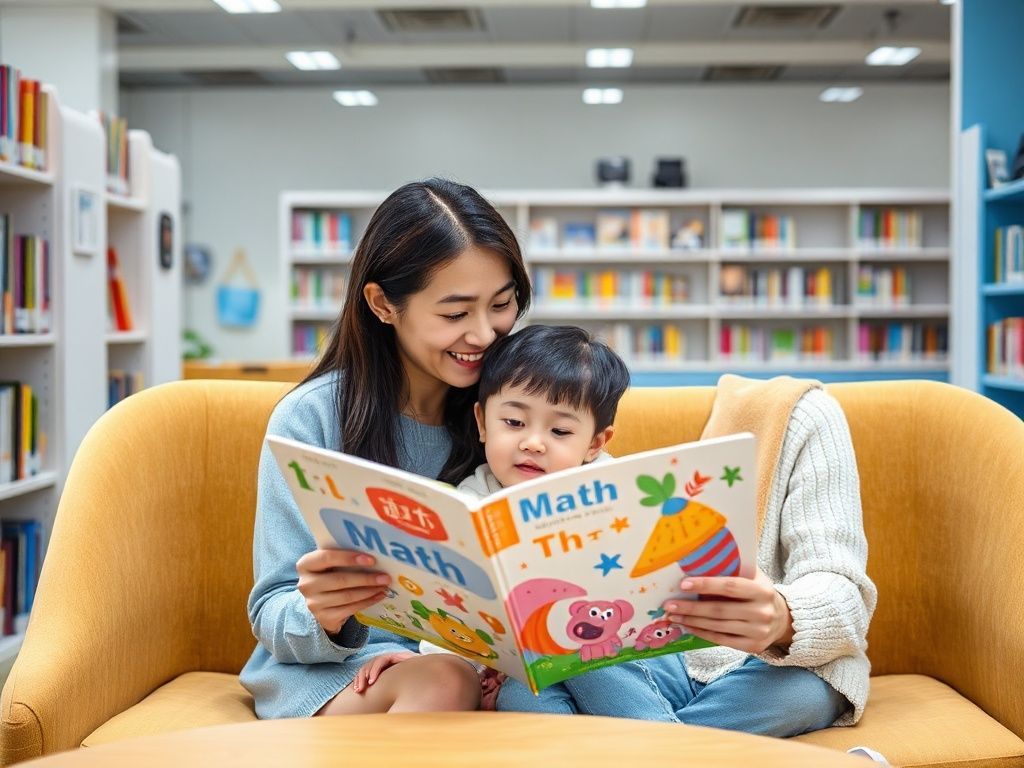
How to handle the transition to elementary school math
As your child moves into formal schooling, you may find that 'New Math' or 'Common Core' methods look different from how you were taught. Do not let this discourage you. These methods often focus on the number sense and [effective parenting strategies] that emphasize logic over rote memorization.
If you find yourself confused by their homework, use it as an opportunity to learn together. Say, 'I haven't seen it done this way before, let's look at the example and figure it out.' This models a growth mindset. For single parents, utilizing online resources like Khan Academy or specialized [educational play activities] can provide the support you might feel you're missing without a second parent in the house.
Remember that 10 minutes of calm, supportive math interaction is worth more than 60 minutes of frustrated, tear-filled study. If emotions run high, stop. Math should be associated with curiosity, not conflict. For more on managing household stress, you might look into [balancing work and home life] as a solo parent.
Conclusion and Action Plan
Building a strong math foundation is a marathon, not a sprint. By focusing on number sense, using concrete objects, and integrating math into daily chores, you can provide your child with a top-tier education regardless of your family structure or time constraints.
To summarize the key points:
- Focus on Number Sense: Prioritize understanding quantity and logic over memorizing formulas.
- Stay in the Concrete: Use physical objects (manipulatives) as long as necessary before moving to paper.
- Integrate, Don't Isolate: Use grocery shopping, cooking, and cleaning as 'hidden' math lessons. Action to take today: Find 10 small, identical items in your house (pennies, buttons, or pasta shapes). Spend 5 minutes playing a 'hiding game' with your child. Put 5 items on the table, have them close their eyes, hide 2, and ask them how many are missing. This simple exercise in subtraction and 'part-part-whole' relationships is the perfect way to start building their foundation right now.
Previous
Screen Time Guidelines for Kids: A Single Parent Survival Guide
Next
Building Kids Math Foundations: A Guide for Single Parents
More in Parenting
A Working Parent's Guide to Children's Eye Care: Protecting Your Firstborn's Vision
A practical guide for busy working parents on protecting their firstborn's vision. Learn how to spot early warning signs, set up healthy home lighting, and build simple routines.
Is It Puberty Rebellion or Teen Anxiety? A 2-Week Guide for Exhausted Parents
Unsure if your teenager is going through normal puberty or experiencing deep emotional anxiety? Discover the 2-week observation method and a daily 5-minute checklist.

Childhood Hives Causes and Management for School-Aged Kids
Childhood hives can be triggered by stress, temperature, or infection. Learn how to manage triggers and decide when your child is ready for school or daycare.

Side Dish Refusal in Toddlers: Strategies for Multi-Child Homes
Learn why children refuse side dishes after a second baby arrives and how to manage picky eating with age-specific strategies and consistent mealtime routines.