Child Brain Development Activities: A Realistic Guide for Single Parents

Key Takeaways
Learn which child brain development activities actually work. We compare low-cost, high-impact strategies for single parents based on cognitive science.
Child Brain Development Activities: A Realistic Guide for Single Parents
It's been seven years since I first realized that child brain development isn't about expensive flashcards or specialized preschools, but about the quality of mundane interactions. At that time, I was a new parent trying to balance a demanding job and a household on my own, constantly worried that my child would fall behind because I couldn't afford the 'premier' enrichment programs I saw online. However, the data tells a much more encouraging story for those of us with limited time and resources. According to First Things First (2023), approximately 90% of a child's brain growth happens before the age of five. This rapid development isn't fueled by luxury toys; it is fueled by consistent, simple engagements that any parent can facilitate.
Disclaimer: This article provides general information only and does not constitute medical, developmental, or psychological diagnosis or treatment. Always consult with a qualified pediatrician or educational specialist regarding your child's specific developmental needs.
What are the most effective activities for cognitive growth?
When we talk about 'brain-boosting' activities, the term often conjures images of complex puzzles or coding for toddlers. In reality, the most effective activities are those that stimulate 'executive function'—the mental skills that include working memory, flexible thinking, and self-control. According to the Center on the Developing Child at Harvard University (2020), the brain is built through a process called 'serve and return.' This is when a child reaches out for interaction through babbling, facial expressions, or gestures, and the adult responds in kind.
For a single parent, this is good news. It means that brain development doesn't require a separate block of time on your calendar. It can happen while you are making dinner or riding the bus. For example, 'narrative play' is a powerful tool. When you describe what you are doing—'I am cutting the green broccoli into small pieces so they are easier to eat'—you are building your child's vocabulary and understanding of cause and effect.
In practice, I found that my seven-year-old's grasp of logic improved significantly when I started asking 'What do you think happens next?' during our bedtime stories. This simple shift from passive listening to active participation challenges the brain to predict outcomes and sequence events. Statistics from the National Center for Education Statistics (2010) show that children who are read to for just 20 minutes a day are exposed to 1.8 million words per year, a number that drastically alters their cognitive trajectory compared to children who are not.
How do physical play and fine motor tasks compare?
There is a common misconception that 'brain work' must be sedentary. However, physical activity is a primary driver of neural connectivity. The American Academy of Pediatrics (2018) emphasizes that active play is essential for developing the brain's executive functions. When a child climbs a structure at the park, they aren't just burning energy; they are solving spatial problems, calculating risks, and practicing gross motor coordination.
Gross Motor Activities
Gross motor activities involve large muscle groups and are vital for overall brain health because they increase blood flow and oxygen to the brain.
- Obstacle Courses: Using household items like pillows and chairs to create a path requires a child to plan their movements and remember a sequence of actions.
- Simon Says: This classic game is an elite exercise for 'inhibitory control'—the ability to stop an impulsive action and follow a specific rule instead.
- Dancing to Music: Following a rhythm helps with pattern recognition and auditory processing.
Fine Motor Activities
Fine motor tasks involve the small muscles in the hands and fingers. These are closely linked to the areas of the brain responsible for writing and self-care.
- Sorting Laundry: Asking a four-year-old to find all the blue socks or sort clothes by size is a high-level categorization task.
- Kitchen Help: Allowing a child to pour water or stir batter (with supervision) builds hand-eye coordination and introduces basic concepts of volume and measurement.
- Playdough or Clay: Squeezing and shaping materials builds the hand strength necessary for later academic tasks. When comparing the two, gross motor play often provides the 'reset' a child needs after a long day at daycare, while fine motor tasks are excellent for quiet engagement when you need to finish a task yourself. In my experience, a 5-minute 'dance party' can often do more for a child's focus than a 30-minute worksheet.

Why does the 'Single Parent' context change the approach?
Single parenting often involves a higher 'cognitive load' for the adult. You are the sole provider, the cook, the cleaner, and the emotional support system. This means that any brain development activity must be sustainable. If an activity requires two hours of setup and a pristine environment, it will likely fail in a single-parent household. We have to prioritize activities that integrate into the 'survival' aspect of parenting.
One of the most critical factors in brain development that is often overlooked is the impact of stress. The National Scientific Council on the Developing Child (2004) explains that 'toxic stress'—prolonged activation of stress response systems—can actually disrupt the development of brain architecture. For a single parent, this means that your own well-being is a brain development activity for your child. If you are constantly red-lining your stress levels, your child picks up on that 'fight or flight' energy, which can hinder their ability to learn.
Specifically, I've noticed that when I stop trying to be the 'perfect educator' and instead focus on just being present for 10 minutes, my children are more settled and curious. Brain development thrives in an environment of felt safety. Therefore, a quiet cuddle while talking about the day can be more 'educational' than a stressful session with an alphabet workbook.
Criteria for choosing the right activities
When you are deciding which activities to prioritize, use these two criteria to help you manage your limited energy and time:
1. Integration Potential
Can this activity happen during a chore I already have to do? If the answer is yes, it is a high-value activity. Examples include counting apples at the grocery store or discussing the colors of cars in traffic. These activities require zero extra time but provide significant cognitive stimulation. If an activity requires a separate trip to a store for supplies and an hour of your undivided attention, save it for a weekend when you have more bandwidth.
2. Engagement vs. Entertainment
Is the child an active participant or a passive observer? An activity that engages the child (like building a fort) is always superior to one that simply entertains them (like watching a video). If you must use a screen, choose interactive content where the child has to answer questions or move their body, rather than just staring. This ensures the brain stays in 'active mode.'
Critical caveats: When these recommendations might not fit
It is important to recognize that not all advice is universal. There are specific situations where the 'just play' or 'just talk' advice might fall short or feel impossible:
- Neurodivergence: If your child has autism, ADHD, or sensory processing disorders, standard 'serve and return' might look different. You may need specialized strategies from an occupational therapist or behavioral specialist. What works for a neurotypical child might cause overstimulation or meltdowns for another.
- Extreme Parental Burnout: If you are in a period of crisis, trying to force 'enrichment' can be counterproductive. In these times, the priority is stability and safety. It is okay to rely on a screen for an hour so you can rest. A rested parent is better for a child's brain than a burnt-out parent trying to do a puzzle.
- Language Barriers: If you are not fluent in the language your child is learning at school, do not feel pressured to teach them in that language. Strengthening their 'home language' is actually better for their overall linguistic brain structure. Bilingualism is a massive cognitive advantage, so speak the language you are most comfortable with.
Common Mistakes to Avoid
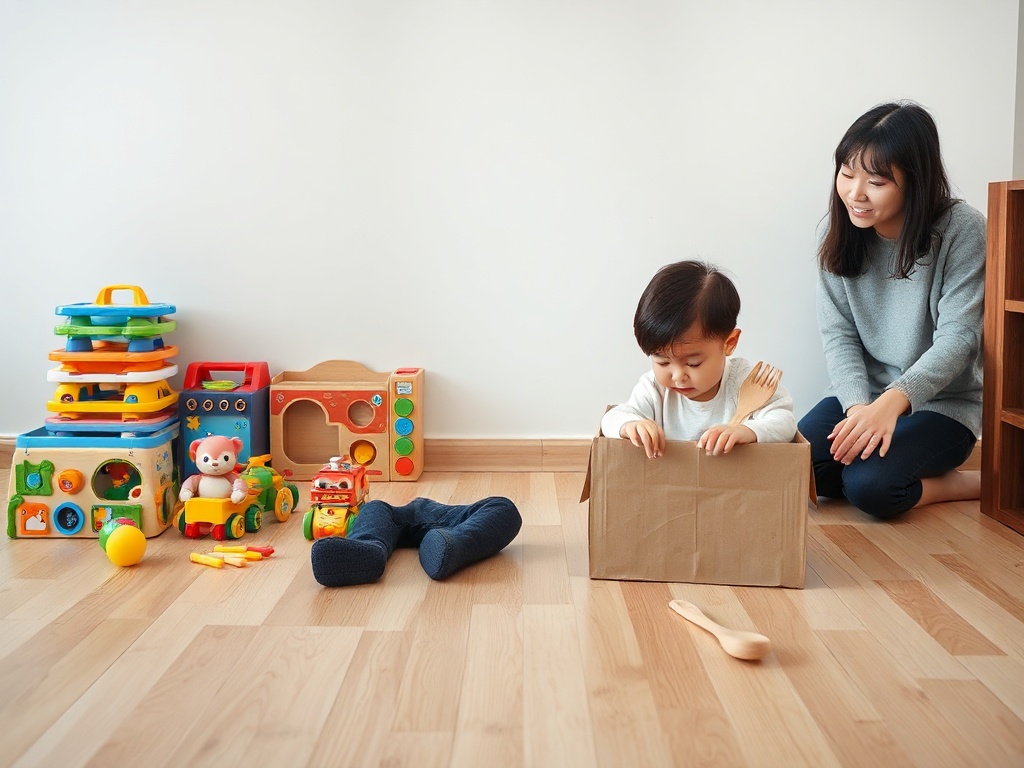
- Warning: Do not equate 'expensive' with 'educational.' Many toys marketed as 'brain-developing' are actually closed-ended and limit creativity. A cardboard box often provides more cognitive stimulation than a $100 plastic toy with pre-programmed lights and sounds.
- Warning: Avoid over-scheduling. A child's brain needs 'boredom' to develop internal motivation and creative problem-solving. If every minute of their day is directed by an adult, they lose the ability to think for themselves.
- Warning: Neglecting your own mental health. As mentioned, your stress levels directly impact your child's brain chemistry. Self-care isn't selfish; it's a developmental necessity for your child.
Next steps: How to move forward
To ensure you are supporting your child's brain development without losing your mind, follow this three-step plan:
Proceed: Continue with 'low-lift' activities like reading for 15–20 minutes before bed and narrating your daily chores. These are the foundations of cognitive growth and require the least amount of extra effort.
Pause: Stop buying 'educational' apps or toys that promise to make your child a genius. Most of these are not backed by rigorous independent research and often serve as a distraction rather than a tool.
Verify: Check in with your child's teacher or pediatrician once every six months to ensure they are hitting their major milestones. If you feel like something is 'off' in their development, do not wait—professional assessment is the only way to get a clear picture.
Summary of Key Points
- Consistency over Intensity: Brain development is built through daily, simple interactions ('serve and return') rather than occasional, expensive classes.
- Physicality Matters: Gross and fine motor play are just as important for the brain as reading and logic puzzles.
- Parental Well-being is Key: Reducing household stress is one of the most effective ways to support a child's cognitive architecture. Action to take today: Pick one routine task you do every day (like washing dishes or walking to the car) and turn it into a 5-minute conversation. Ask your child two 'Why?' or 'How?' questions during that time and really listen to their answers. This tiny shift costs zero dollars and zero extra minutes, but it builds the neural connections that last a lifetime.
Previous
Reducing Aggression in Children: Practical Steps for Elementary Parents
Next
Child Brain Development Activities: A Realistic Guide for Single Parents
More in Parenting
A Working Parent's Guide to Children's Eye Care: Protecting Your Firstborn's Vision
A practical guide for busy working parents on protecting their firstborn's vision. Learn how to spot early warning signs, set up healthy home lighting, and build simple routines.
Is It Puberty Rebellion or Teen Anxiety? A 2-Week Guide for Exhausted Parents
Unsure if your teenager is going through normal puberty or experiencing deep emotional anxiety? Discover the 2-week observation method and a daily 5-minute checklist.

Childhood Hives Causes and Management for School-Aged Kids
Childhood hives can be triggered by stress, temperature, or infection. Learn how to manage triggers and decide when your child is ready for school or daycare.

Side Dish Refusal in Toddlers: Strategies for Multi-Child Homes
Learn why children refuse side dishes after a second baby arrives and how to manage picky eating with age-specific strategies and consistent mealtime routines.