How to Build Lasting Organizing Habits in Your Eldest Child
Key Takeaways
Learn how to teach your eldest child sustainable organizing habits. This guide offers practical, no-nonsense strategies for working parents to manage toy clutter.
How to Build Lasting Organizing Habits in Your Eldest Child
A friend of mine once spent an entire Saturday morning cleaning her 7-year-old daughter's bedroom, only for it to return to a state of total chaos by Sunday afternoon. She had spent 4 hours sorting every building block by color and alphabetizing the bookshelf, thinking a fresh start would inspire her child to keep it that way. Instead, her daughter felt overwhelmed by the strict new system and simply stopped trying to put anything away at all. Within 24 hours, the floor was once again a minefield of plastic parts and stray socks.
The Reality of Childhood Organization
As a working mother of two, I have learned that parenting advice often sounds wonderful in a book but falls apart when you walk through the door at 6 PM after a long day at the office. We want our children to be responsible and organized, but the path to getting there is rarely linear. This article focuses on building these habits specifically in the eldest child. Why the eldest? Because they often set the standard for the household. When the oldest child masters the art of the '15-minute reset,' the younger siblings naturally begin to mimic those behaviors.
Disclaimer: The information provided in this article is for general informational purposes only. It does not constitute professional psychological, developmental, or educational advice. For specific behavioral concerns or developmental assessments, please consult a qualified child psychologist or pediatrician.
Managing a household requires a balance between high expectations and the reality of a busy schedule. According to a 2022 survey by a leading home organization platform, approximately 60% of parents cite toy clutter as a primary source of daily stress. To combat this, we need a system that is sustainable, not perfect. We are looking for a method that survives a late night at work or a weekend of flu symptoms.
Foundational Concepts: Pre-Check Criteria
Before you start implementing a new tidying routine, you must evaluate whether your current environment is setting your child up for failure. A child cannot organize a space that is fundamentally overstuffed. This is the 'beginner' phase of the process, where the focus is on the physical environment rather than the child's behavior.
The Capacity Rule
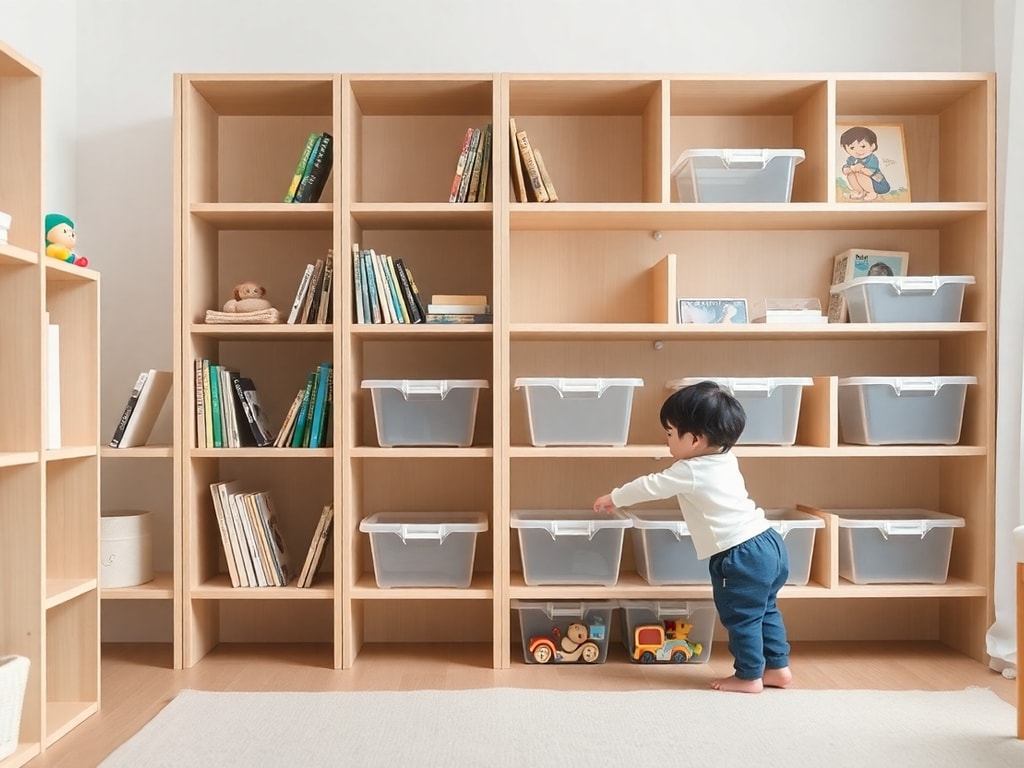
In my experience, a child's ability to tidy is inversely proportional to the number of items they own. If a toy box is filled to 100% capacity, a 7-year-old will have to dump everything out just to find one specific item. Aim for a 70% capacity rule. This means shelves and bins should have enough 'breathing room' that an item can be put away with one hand. If it requires a complex maneuver to fit a toy back into its spot, the habit will not stick.
Decision Criteria for Success
When deciding which system to use, evaluate it based on these two criteria:
Time Cost: Does the system take more than 10 minutes for the child to complete? If yes, it is too complex for a daily routine.
Sustainability: Can the child maintain this without you standing over them? If it requires constant adult supervision, it is a chore for you, not a habit for them.
Deep Dive: The Sustainable Method for the Eldest Child
Once the environment is prepared, we move into the intermediate and advanced stages of habit formation. This is where we move beyond 'cleaning up' and toward 'organizing.' For an eldest child, usually between the ages of 6 and 9, they are developing the cognitive ability to categorize and plan. We can leverage this by giving them more autonomy.
The Three-Bin System
Instead of specific, narrow categories (like 'blue cars' vs 'red cars'), use broad categories. I recommend the Three-Bin System for daily use:
Active Toys: Items used daily (building blocks, favorite dolls).
Quiet Activities: Books, puzzles, and art supplies.
The 'Elsewhere' Bin: Items that belong in other rooms or need parental help to fix. By limiting the categories, you reduce the 'decision fatigue' that often leads to tantrums. A 7-year-old can quickly decide if an object is a toy or a book. They struggle much more when they have to decide if a plastic figure belongs in the 'superhero' bin or the 'action figure' bin.
The 15-Minute Reset
Specific numbers help children understand boundaries. Rather than saying 'clean your room,' which is a vague and daunting command, use a timer. In our house, we do a '15-minute reset' before the evening snack. We set a physical kitchen timer, and the goal is simply to move as many items as possible from the floor to their designated bins.
In practice, this looks like a race. I might say, 'I bet you can't get all the LEGOs in the bin before the 5-minute mark.' This gamification turns a boring chore into a challenge. For a working parent, this 15-minute window is often the only time we have to manage the house between getting home and starting the bedtime routine. Consistency here is more important than perfection. Doing a 5-minute tidy every single day is 10 times more effective than a 2-hour deep clean once a month.
Ownership and Autonomy
For the eldest child, it is crucial to give them a sense of 'territory.' Specifically, allow them to choose how one specific area of their room is organized. This might be their trophy shelf or their drawing desk. When they have a say in the system, they are more likely to defend it against the chaos of a younger sibling. This builds the child development milestones of responsibility and self-regulation.
When the Advice Fails: Critical Caveats
No system is foolproof, and it is important to recognize when the advice provided here might not apply to your situation.
- During Transitions: If your child is starting a new school year or dealing with a big change (like a new sibling), their 'orderliness' will likely plummet. This is not a failure of the habit; it is a symptom of emotional exhaustion. In these times, pause the new requirements and revert to doing it together.
- Sensory Overload: Some children find the process of tidying—the sound of clanging plastic, the visual mess—to be physically overwhelming. If your child freezes or becomes aggressive during clean-up, the 'Three-Bin System' might still be too much. You may need to reduce the toy count by another 50% to make the environment manageable.
- The Working Parent Trap: The biggest reason these systems fail is parental inconsistency. If we are too tired to enforce the 15-minute reset for three nights in a row, the child learns that the rule is optional. If you cannot commit to a daily reset, it is better to schedule a 'Saturday Morning 30-Minute Blitz' instead. Choose a frequency you can actually maintain.

Implementation: Practical Steps to Apply Right Now
If you are ready to start today, follow these specific steps to transition from a cluttered home to a structured one.
The Purge (Parent Only): Before involving the child, remove 20% of the toys that are broken, missing pieces, or no longer age-appropriate. Do this while they are at school to avoid unnecessary negotiations.
The Labeling Phase: Use visual labels (pictures + words) on bins. Even if your 7-year-old can read perfectly, pictures are processed faster by the brain, making it easier to tidy up when they are tired.
The 'Body Doubling' Technique: For the first 7 days, do not just tell them to tidy. Sit in the room with them. You don't have to do the work, but your physical presence provides the 'executive function' they might be lacking after a long school day.
Establish the 'One In, One Out' Rule: For every new toy that enters the house (from birthdays or holidays), one old toy must be donated. This keeps the volume of items stable.
The Evening Review: Spend 2 minutes at the end of the 15-minute reset praising specific actions. 'I love how you put the books spine-out' is much more effective than 'Good job cleaning.' Creating effective house rules around organization is about building a lifestyle, not just a one-time project. It requires patience and the willingness to accept a 'good enough' result on nights when everyone is exhausted.
Conclusion
Teaching a child to organize is a long-term investment in their independence. It is less about the state of the floor and more about the state of their mind—learning how to categorize, prioritize, and respect their environment.
To summarize the key points:
- Start with the environment: You cannot organize a space that is overfilled; aim for 70% capacity.
- Simplify the categories: Use broad bins rather than specific organizers to reduce decision fatigue.
- Consistency over intensity: A daily 15-minute reset is more sustainable and effective than occasional deep cleans. Your specific action to take today: Pick one small area—a single toy drawer or a bookshelf—and apply the 70% rule. Remove the excess items and set a timer for 10 minutes to organize what remains with your child. Next Steps:
- Proceed: If your child is receptive, move on to a larger zone like the closet next week.
- Pause: If the 10-minute trial ends in a meltdown, reduce the number of items in that area by half before trying again.
- Verify: If you suspect developmental delays are affecting their ability to follow multi-step directions, consult with a school counselor or pediatrician to ensure your expectations match their current capabilities.
Previous
Teenage Communication Strategies for Exhausted Grandparents
Next
How to Build Lasting Organizing Habits in Your Eldest Child
More in Parenting
A Working Parent's Guide to Children's Eye Care: Protecting Your Firstborn's Vision
A practical guide for busy working parents on protecting their firstborn's vision. Learn how to spot early warning signs, set up healthy home lighting, and build simple routines.
Is It Puberty Rebellion or Teen Anxiety? A 2-Week Guide for Exhausted Parents
Unsure if your teenager is going through normal puberty or experiencing deep emotional anxiety? Discover the 2-week observation method and a daily 5-minute checklist.

Childhood Hives Causes and Management for School-Aged Kids
Childhood hives can be triggered by stress, temperature, or infection. Learn how to manage triggers and decide when your child is ready for school or daycare.

Side Dish Refusal in Toddlers: Strategies for Multi-Child Homes
Learn why children refuse side dishes after a second baby arrives and how to manage picky eating with age-specific strategies and consistent mealtime routines.