Best Age to Start English Exposure for Children: A Parent Guide
Key Takeaways
Discover the best age to start English exposure for your child. Compare infancy, preschool, and elementary methods based on real parenting experience and research.
Best Age to Start English Exposure for Children: A Parent Guide
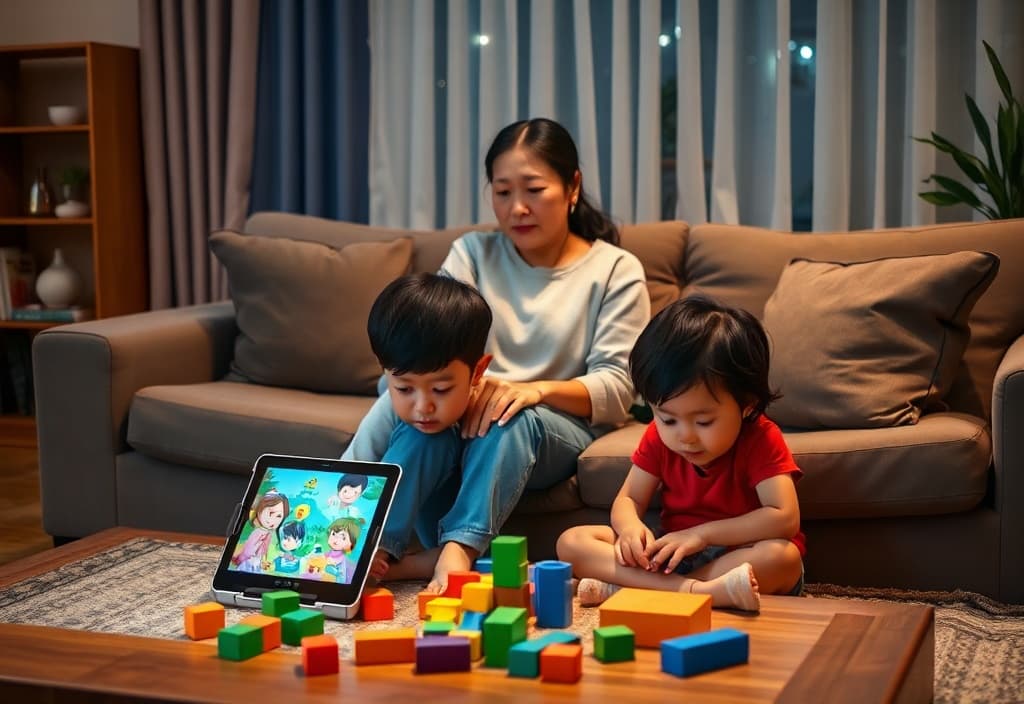
Have you ever found yourself staring at a shelf of colorful English board books, wondering if you are already too late to start, or perhaps, dangerously too early? It is a common point of anxiety for many parents today. We live in a world where the pressure to give our children a head start is immense, yet the conflicting advice from educators and fellow parents can be overwhelming. As a mother of three children—one in elementary school, one in kindergarten, and a toddler of 18 months—I have seen firsthand that there is no single 'magic' age that fits every child perfectly. Each of my children has responded to English exposure in vastly different ways, influenced by their unique temperaments and cognitive development stages.
This article provides general informational content regarding childhood education and language exposure. It does not constitute professional pedagogical advice, developmental psychology diagnosis, or official educational counseling. Every child develops at their own pace, and parents should consult with educational specialists or pediatricians if they have specific concerns about their child's language acquisition or developmental milestones.
To understand when to begin, we must first look at the three primary windows of opportunity that most parents consider. Each stage comes with its own set of advantages and challenges. The strategy you choose should depend less on what your neighbor is doing and more on your child's personality and your family's daily rhythm.
- The Infancy Window (0–2 years): Focusing on auditory familiarity and phoneme recognition.
- The Playful Preschooler (3–5 years): Utilizing natural curiosity and social imitation.
- The Academic Transition (7 years and older): Leveraging logical thinking and native language literacy.
The Infancy Window: Building an Ear for Sounds
Many parents choose to start English exposure almost from birth. The logic behind this is rooted in the fact that infants are 'citizens of the world' when it comes to phonemes. According to a landmark study by researchers at the University of Washington, babies under the age of 10 months can distinguish between the sounds of all human languages. By the time they reach 12 months, their brains begin to specialize in the sounds of their native language, effectively 'tuning out' foreign phonetic nuances.
In practice, this does not mean you should be teaching grammar to a newborn. Instead, it involves passive exposure. For my youngest child, who is currently 18 months old, this looks like playing English nursery rhymes during playtime or reading very simple board books with one or two words per page. The goal here is not comprehension, but rather the preservation of the brain's ability to hear and mimic the specific rhythms and intonations of English.
However, a critical warning for this stage is the 'video deficit' effect. Research has consistently shown that children under the age of 2 do not learn language effectively from screens. They require human interaction. If you play an English video but do not interact with the child, the exposure is largely wasted. Specifically, a 2003 study published in the Proceedings of the National Academy of Sciences found that infants learned foreign language sounds from live interaction but showed zero learning from the exact same content delivered via television. If you start this early, keep it audio-based or, better yet, person-to-person.
The Playful Preschooler: Learning Through Joy
Between the ages of 3 and 5, children enter a phase where their social curiosity peaks. This is often cited as the 'golden age' for language exposure because children are old enough to follow a story but young enough to lack the self-consciousness that often hinders older learners. At this age, English is not a 'subject' to be studied; it is a tool for play.
For my middle child, who is currently in kindergarten, English exposure is entirely driven by interests. If they are obsessed with dinosaurs, we find English books about Triceratops. If they love a specific cartoon, we watch it in English for 20 minutes a day. The key at this stage is 'comprehensible input.' This means the child should understand about 70% of what is happening through context, even if they do not know the specific English words.
One common mistake parents make during these years is turning exposure into an interrogation. Asking 'What is this in English?' every five minutes can create a negative association with the language. Instead, try to use 'parallel talk.' For example, if your child is drawing, you might say, 'Oh, you are using a blue crayon. That is a big blue circle!' without demanding a response in English. This builds a low-stress environment where the 'affective filter'—a term coined by linguist Stephen Krashen to describe the emotional barrier to learning—remains low.
The Academic Transition: Using Logic and Literacy
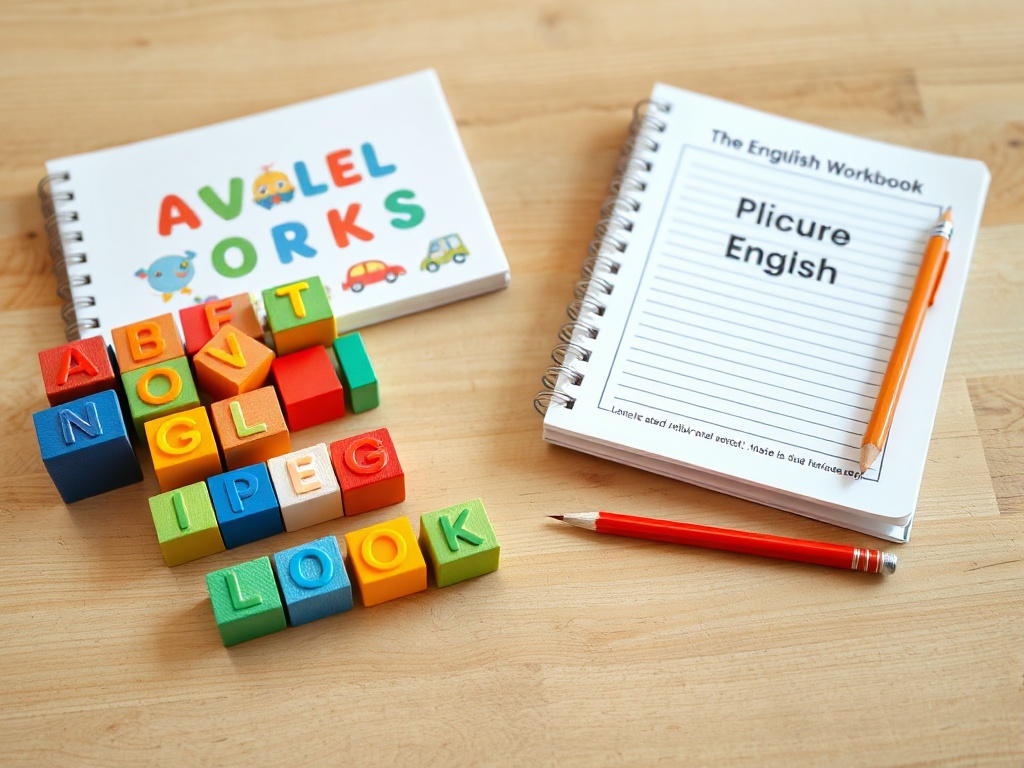
Wait, what if you missed the preschool window? Many parents worry that starting English at age 7 or 8 is too late. In reality, there are significant advantages to starting later. By this age, children have a strong grasp of their native language's structure. They understand the concept of a 'verb' or a 'sentence,' even if they do not know the formal terms. This cognitive maturity allows them to learn the mechanics of a second language much faster than a toddler.
My eldest child did not have intensive English exposure until they were nearly 7 years old. While their accent might not be as effortless as someone who started at birth, their ability to grasp phonics and reading rules was significantly faster. Because they could already read in their native language, the transition to decoding English words took months rather than years.
According to a 2018 study by researchers at MIT, while the ability to reach native-level syntax begins to decline after age 10, the window for learning is still very much open throughout adolescence. The primary challenge for the 7+ age group is not cognitive ability, but motivation. At this age, children are aware that they 'cannot' speak English well, which can lead to frustration. To succeed here, the focus must shift from 'exposure' to 'purpose.' For example, using English to play a popular international video game or to research a hobby can provide the necessary drive that simple nursery rhymes no longer offer.
Critical Caveats: When Advice May Fail
It is important to acknowledge that the 'earlier is better' mantra is not a universal truth. There are several scenarios where intensive early English exposure might actually be counterproductive.
Language Burnout
If a child is forced into rigorous English academies or long hours of study before they are emotionally ready, they may develop a deep-seated dislike for the language. I have observed this in several of my friends' children who were enrolled in 'English-only' preschools. By age 8, some of these children refused to even open an English book because the language was associated with stress and high expectations rather than connection.
The Mother Tongue Foundation
A child's primary language is the vehicle for their emotional and cognitive development. If English exposure comes at the expense of developing a rich, nuanced vocabulary in the native language, it can lead to 'semilingualism,' where a child is not fully proficient in either language. Experts generally recommend that the home language should remain the primary focus until the child has a solid emotional and linguistic foundation, usually around age 3 or 4.
Temperament Sensitivity
Not every child is an extroverted mimic. A shy, observant child may find the pressure to 'speak' English in a group setting terrifying. For such children, a 'silent period' is necessary. They may listen for a year or more without saying a single word in English. Forcing them to speak before they are ready can cause them to shut down entirely. In these cases, the 'standard' advice of interactive classes might fail, and a more private, low-pressure home listening environment would be more appropriate.

Decision Criteria for Parents
When deciding when and how to start English for your child, consider these two main criteria to help tailor your approach:
Your Child's Frustration Threshold: Does your child get upset when they do not understand something immediately? If they have a low frustration threshold, starting with very gentle, passive exposure (music, background stories) is better than active teaching. If they are adventurous and do not mind making mistakes, you can introduce interactive games and social classes much earlier.
The Sustainability of Your Daily Routine: Can you realistically maintain the exposure level you have chosen? It is better to do 10 minutes of English reading every night for five years than to do two hours of intensive study every day for one month and then quit. Look at your schedule and your own energy levels. If you are exhausted by 6:00 PM, an evening English-only rule will likely fail and create a tense household environment.
Synthesis: Finding the Middle Ground
Whether you start at birth or at age seven, the most critical factor is not the start date, but the environment you create. English should be seen as a doorway to more things the child loves—stories, games, information, and people—rather than a hurdle they must jump over to please their parents.
In my journey with my three children, I have learned that the 'best' time is whenever you can make it a natural, joyful part of your life. For my eldest, it was the logic of phonics at age seven. For my middle child, it was the humor of English cartoons at age four. For my youngest, it is the rhythm of songs at 18 months. None of these paths are 'wrong'; they are simply different responses to the same goal.
Summary of Key Points
- Early exposure (0–2 years) is best for auditory 'tuning' but must be human-centric, not screen-based.
- Preschool exposure (3–5 years) leverages natural play and social imitation, provided the 'affective filter' is kept low.
- Older starts (7+ years) benefit from logical thinking and existing literacy, though they require stronger personal motivation.
Your Action Step for Today
Instead of researching expensive curriculums or testing centers, choose one 15-minute window today—perhaps during breakfast or right before bed—to introduce a single English element that matches your child's current interest. This could be a song, a short story, or even just labeling three items they are currently playing with. Observe their reaction. If they are curious, continue. If they are resistant, pause and try a different medium tomorrow. The goal is to verify what fits your child's unique temperament before committing to a long-term strategy.
Previous
Elementary school supplies checklist for new parents: Timeline and tips
Next
Best Age to Start English Exposure for Children: A Parent Guide
More in Parenting
A Working Parent's Guide to Children's Eye Care: Protecting Your Firstborn's Vision
A practical guide for busy working parents on protecting their firstborn's vision. Learn how to spot early warning signs, set up healthy home lighting, and build simple routines.
Is It Puberty Rebellion or Teen Anxiety? A 2-Week Guide for Exhausted Parents
Unsure if your teenager is going through normal puberty or experiencing deep emotional anxiety? Discover the 2-week observation method and a daily 5-minute checklist.

Childhood Hives Causes and Management for School-Aged Kids
Childhood hives can be triggered by stress, temperature, or infection. Learn how to manage triggers and decide when your child is ready for school or daycare.

Side Dish Refusal in Toddlers: Strategies for Multi-Child Homes
Learn why children refuse side dishes after a second baby arrives and how to manage picky eating with age-specific strategies and consistent mealtime routines.