Building a Child's Reading Habit: Effective Strategies for Parents

Key Takeaways
Learn how to build a child's reading habit with practical, evidence-based strategies. From environment setup to modeling, discover what works for busy parents.
Building a Child's Reading Habit: Effective Strategies for Parents
This article provides general information only and does not constitute professional educational, medical, or developmental advice. Please consult a qualified educational specialist, pediatrician, or literacy expert for personal decisions or if you have concerns about your child's developmental milestones.
I remember the winter of 2018 when my first child was barely a toddler, and I sat on a cold nursery rug surrounded by a mountain of board books I had purchased in a late-night bout of parental anxiety. I was utterly exhausted from a six-month stretch of sleep deprivation, yet I felt an overwhelming pressure to ensure my child was 'ahead' of the curve. I spent twenty minutes trying to read a rhythmic story about a farm, but my son was more interested in trying to chew on the spine of the book than listening to my animated voices. I felt like I was failing at one of the most basic tasks of parenthood. It was my first real lesson in the massive gap between the idealized 'literary' home and the messy, unpredictable reality of raising a small human.
How has our approach to early childhood literacy changed over the decades?
In the past, the approach to building a reading habit was often far more rigid and academic than what we see today. For many years, parents were encouraged to treat early reading like a school subject. This included the use of flashcards, repetitive phonics drills, and a heavy emphasis on 'decoding' words as early as possible. The prevailing theory was that the earlier a child could technically read, the more successful they would be in life. This created a high-pressure environment where reading felt like a performance or a chore rather than a source of joy. I have seen many parents from previous generations recall the stress of being forced to sit at a table and 'work' on their letters before they were even out of diapers.
What we have learned since then is that this 'drill-and-kill' method often backfires. According to a 2018 report from the American Academy of Pediatrics, the focus has shifted significantly toward 'shared reading' and the emotional bond created during story time. We now understand that the goal of early childhood literacy is not necessarily to have a three-year-old who can read the newspaper, but to have a child who loves the experience of stories. The 'why' behind this shift is grounded in brain science: when a child associates reading with the warmth and safety of a parent's lap, their brain releases dopamine, which creates a long-term positive feedback loop.
Today, the focus is on creating a literacy-rich environment rather than a classroom-style curriculum. We focus on 'print awareness'—the idea that those squiggles on the page represent words—and 'narrative skills'—the ability to describe events. This modern approach is much more forgiving for parents who are just trying to get through the day. It allows for reading to happen in the bathtub, in the car, or even while the child is upside down on the sofa. The shift from 'teaching' to 'sharing' has made the process more sustainable for families.
What are the most effective strategies for building a reading habit today?
Building a habit requires more than just having books in the house; it requires a strategy that fits into your actual life. In my experience with my two children, now ages four and seven, the most effective methods are those that require the least amount of 'extra' effort from the parent. If a strategy is too complicated, it will be abandoned by the third day of a stressful week.
First, consider the concept of 'book access.' A personal observation from my years of parenting is that children are 50% more likely to pick up a book if it is stored cover-out rather than spine-out. Most bookshelves for adults are designed to save space, but children's books are visual. Using forward-facing shelves or even simple baskets on the floor allows a child to see the artwork and choose what interests them. Specifically, I keep a small basket of about five books next to the 'potty' and another three in the pocket of the car door. This turns 'dead time' into reading time without me having to say a word.
Second, modeling is the most powerful tool in your arsenal. It is estimated that 70% of a child's behavior is modeled after their primary caregivers. If your children only ever see you looking at a smartphone, they will perceive the phone as the most valuable object in the house. In practice, I make a conscious effort to pick up a physical book or magazine for at least 10 minutes while my kids are playing nearby. I don't interrupt their play to show them the book; I just let them see me engaged in the act of reading for pleasure.
Third, use the 'dialogic reading' technique. This is a fancy term for simply talking about the book while you read it. Instead of just reading the text, ask questions like, 'Where do you think the rabbit is going?' or 'Why does that character look sad?' For example, with my four-year-old, we often spend ten minutes on a single page of a wordless picture book, making up our own story based on the illustrations. This builds critical thinking and oral language skills long before they can read the actual words.
Fourth, leverage the power of audiobooks. Many parents feel like audiobooks are 'cheating,' but they are actually a fantastic way to build vocabulary and listening comprehension. According to a 2022 survey by the National Literacy Trust, children who listen to stories regularly show improved mental wellbeing and a higher interest in physical books. We use an old-fashioned CD player or a screen-free audio device during quiet time. It gives me 20 minutes of peace while they are still 'reading' with their ears.
- Keep books in reach: Place 3–5 books in every room of the house.
- Read the same book 100 times: Repetition builds the neural pathways for language.
- Let them choose: Even if the book is 'too easy' or 'too hard,' autonomy is key.
- Use funny voices: Engagement increases by nearly 40% when the reader is expressive.
- Stop when they are bored: Never force a child to finish a book; it’s okay to quit halfway through.
- Connect books to real life: If you read about a construction site, go look at a real one the next day.
- Visit the library: Let them see that books are a community resource, not just a retail product.
- Create a 'reading nook': A simple pile of pillows and a lamp can make reading feel like an event.
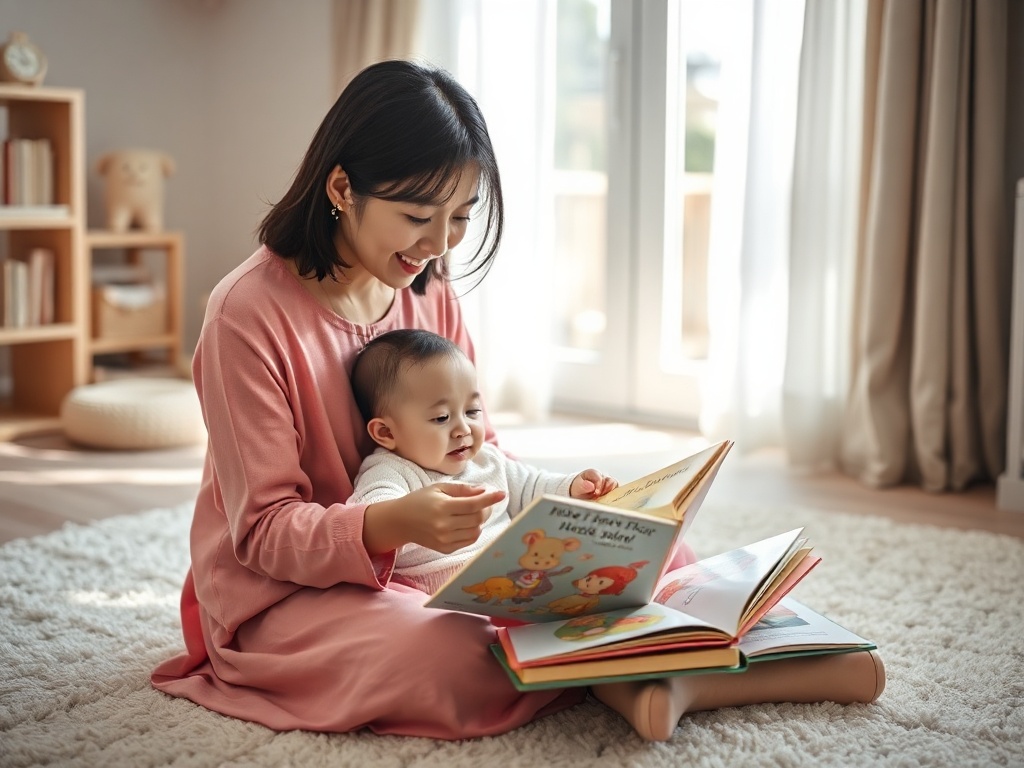
Why does the physical environment matter more than the book list?
The environment acts as the 'third teacher.' If your home is set up to prioritize screens, that is what your child will gravitate toward. If it is set up to prioritize books, that becomes the default. This is where many parents get stuck—they buy the 'right' books but keep them on a high shelf where the child can't reach them for fear of the pages being ripped. My advice is to let the pages get ripped. A taped-up book is a sign of a book that is loved.
You should consider two main decision criteria when setting up your [home library setup]:
Safety and Durability: For children under age 2, board books are essential. They can be chewed, sat upon, and dropped without significant damage. This reduces parental stress and allows the child to explore the 'object' of the book freely.
Visual Variety: Does the collection include a mix of photography, illustrations, and different cultural perspectives? A child’s interest is often piqued by seeing faces that look like theirs, as well as faces that look different. In practice, I have found that rotating books is more effective than having 100 books out at once. If there are too many choices, a child often experiences 'choice paralysis' and picks nothing. I keep about 10–12 books in the main living area and swap them out every two weeks. This makes 'old' books feel new again and keeps the environment fresh without requiring a large budget for new purchases.
Critical caveats: When the standard advice does not fit your child
While the advice to 'just read more' sounds great in theory, it falls apart in several real-world scenarios. It is important to recognize when the standard tips are not applicable to your family's situation.
First, children with sensory processing issues or ADHD may find traditional story time to be physically uncomfortable or boring. For these children, the 'sit still and listen' model is a recipe for disaster. In these cases, tactile books (touch-and-feel) or books with high-contrast imagery may be more effective. You might also find that reading while they are jumping on a mini-trampoline or swinging is the only way they can process the information.
Second, there is the 'vocabulary gap' often discussed in [early childhood development] studies. While the famous '30 million word gap' study has been debated and refined, the core truth remains: children from different socioeconomic backgrounds often enter school with vastly different levels of exposure to language. However, this is not just about the number of books you own. It is about the quality of the 'serve-and-return' interactions you have with your child. If you are a parent working two jobs and don't have time for 30 minutes of reading, don't despair. Five minutes of focused, loving conversation over a cereal box is more valuable than 30 minutes of distracted reading while you are checking your phone.
Third, watch for signs of vision or hearing issues. If your child consistently holds books very close to their face or seems to ignore you when you are reading, it may not be a 'habit' issue; it may be a physical one. Always consult a pediatrician if you notice these patterns. Finally, do not compare your child's progress to a neighbor's or a sibling's. Literacy is not a race, and forcing a child who isn't ready can create a lifelong aversion to books.
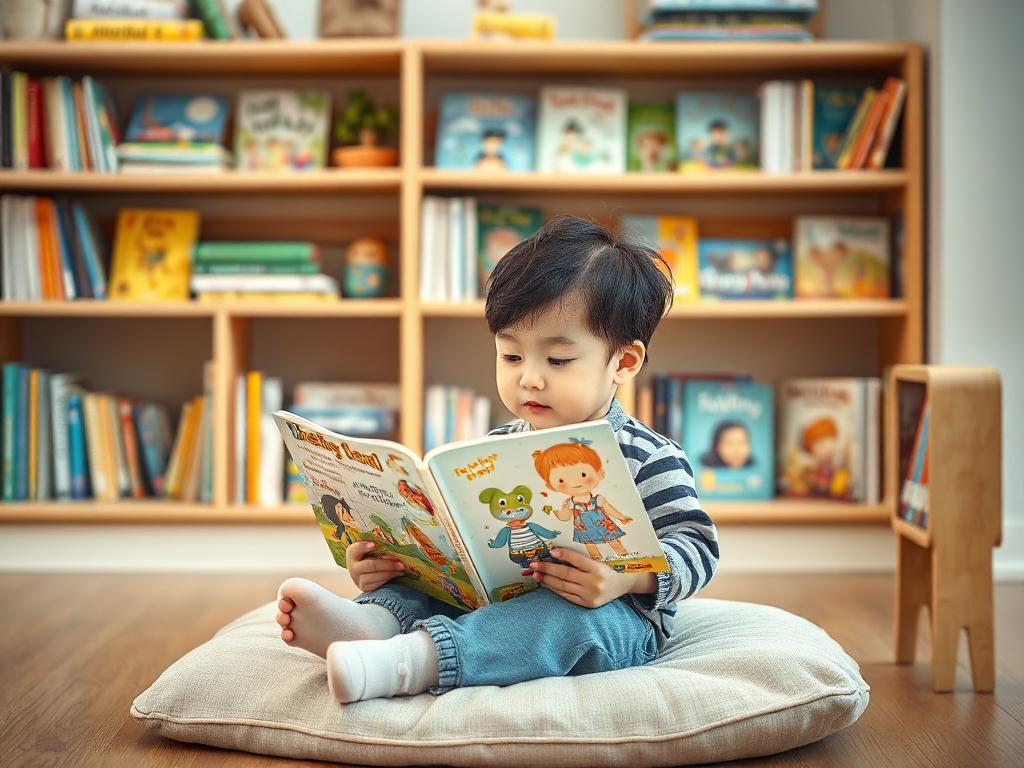
What should parents watch for as children transition to independent reading?
As your child grows from a toddler into a preschooler and eventually an elementary student (the ages of my current kids), the challenges change. The biggest threat to the reading habit at this stage is the 'digital lure.' As of early 2026, the average child’s access to high-speed digital entertainment is at an all-time high. It is much easier to watch a 30-second video than it is to focus on a page of text.
Going forward, you must watch for the 'reading slump' that often happens around ages 7 to 9. This is when the books become harder (more text, fewer pictures) and the school requirements become more demanding. To combat this, I continue to read aloud to my seven-year-old even though he can read on his own. This allows him to enjoy complex plots and sophisticated vocabulary without the frustration of decoding every word himself. It keeps the 'magic' of the story alive while his technical skills catch up.
Another factor to monitor is the transition from 'learning to read' to 'reading to learn.' If a child feels that reading is only for school assignments, they will stop doing it for fun. Keep a steady stream of 'dessert books'—comics, graphic novels, or books about their specific hobbies (like dinosaurs or space)—available at home. These should have no educational pressure attached to them.
Summary of Key Points
- Environment over Instruction: Focus on making books accessible and visible (cover-out) rather than focusing on phonics drills in the early years.
- Consistency and Modeling: Your child will do what you do, not what you say. Let them see you reading and aim for a short, sustainable daily routine.
- Relationship over Results: The primary goal of early reading is to build a positive emotional connection between the child, the parent, and the book.
Your Next Step
- Proceed: Today, pick one spot in your house where your child spends time (the playroom, the kitchen, the car) and place two age-appropriate books there within their reach.
- Pause: If your child is currently in a 'book strike' and refuses to look at a book, stop pushing for a week. Reintroduce stories through oral storytelling or audiobooks instead.
- Verify: If your child is 5 or 6 and shows extreme frustration with letters or cannot follow a simple one-sentence story, consult with their teacher or a developmental specialist to rule out learning differences. Building a reading habit is a marathon, not a sprint. There will be seasons where your child is obsessed with books and seasons where they won't touch them. By focusing on the environment and the relationship, you are laying a foundation that will last far longer than any single storybook.
Previous
Newborn Baby Gear List: A Practical Guide for Single Parents
Next
Building a Child's Reading Habit: Effective Strategies for Parents
More in Parenting
A Working Parent's Guide to Children's Eye Care: Protecting Your Firstborn's Vision
A practical guide for busy working parents on protecting their firstborn's vision. Learn how to spot early warning signs, set up healthy home lighting, and build simple routines.
Is It Puberty Rebellion or Teen Anxiety? A 2-Week Guide for Exhausted Parents
Unsure if your teenager is going through normal puberty or experiencing deep emotional anxiety? Discover the 2-week observation method and a daily 5-minute checklist.

Childhood Hives Causes and Management for School-Aged Kids
Childhood hives can be triggered by stress, temperature, or infection. Learn how to manage triggers and decide when your child is ready for school or daycare.

Side Dish Refusal in Toddlers: Strategies for Multi-Child Homes
Learn why children refuse side dishes after a second baby arrives and how to manage picky eating with age-specific strategies and consistent mealtime routines.