Introducing Two Dogs Successfully After a Failed First Attempt

Key Takeaways
Introducing two dogs requires a structured approach to prevent aggression. Follow this safety-first checklist to ensure a successful meeting and long-term peace.
Introducing Two Dogs Successfully After a Failed First Attempt
Owners who prioritize immediate socialization and those who prioritize controlled distance often see vastly different results in long-term household harmony. One group may find themselves managing lifelong territorial disputes and expensive behavioral interventions, while the other enjoys a peaceful multi-dog environment where both pets feel secure. The difference lies not in the dogs' personalities alone, but in the structural framework of their first encounter.
Disclaimer: This article provides general information regarding canine behavior and is not a substitute for professional veterinary advice or a consultation with a certified animal behaviorist. If your dog has a history of severe aggression or biting, do not attempt an introduction without professional on-site supervision.
Why Controlled Introductions Actually Matter
Ignoring the mechanics of a proper introduction can lead to a phenomenon known as 'trigger stacking.' When a dog is moved to a new environment, their cortisol levels—the hormone associated with stress—can take 72 hours or more to return to a baseline state. If you introduce a new dog during this window of high arousal, a minor sniff can escalate into a full-scale fight within 2 seconds. The consequence of a failed introduction is rarely just a one-time scrap; it often creates a 'negative association' that can take months or even years of counter-conditioning to reverse.
In practice, a bad first meeting often results in a 'crate and rotate' lifestyle. This means the owners must keep the dogs in separate rooms or crates at all times, swapping them out like clockwork to prevent an encounter. This lifestyle is mentally taxing for the humans and socially isolating for the dogs. By following a strict protocol, you are not just preventing a fight; you are protecting the future quality of life for everyone in the home.
How to Introduce Two Dogs Using the Neutral Ground Method
To ensure a successful meeting, you must remove the element of territoriality. This means the meeting should never happen in your backyard, your living room, or even the sidewalk directly in front of your house.
Step 1: The Parallel Walk
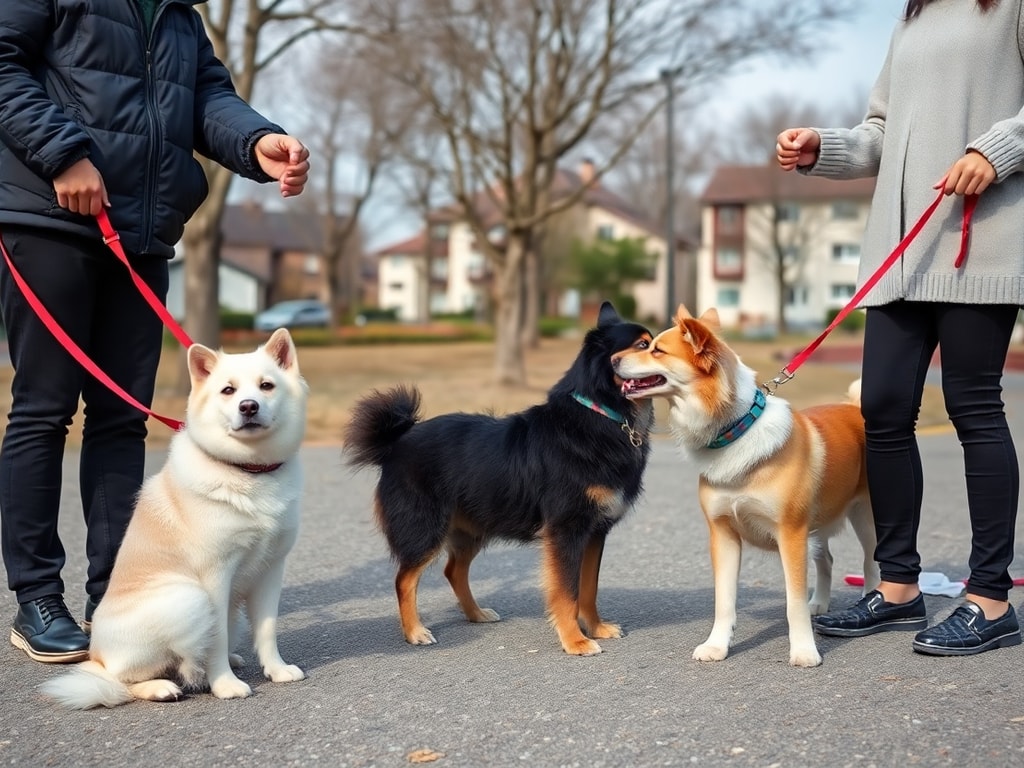
Start the introduction in a neutral park or a quiet street that neither dog considers 'theirs.' You will need two handlers—one for each dog. Begin by walking the dogs in the same direction, about 10 to 15 feet apart. Do not let them look at each other directly; keep them focused on walking forward. This mimics the natural way wild canines move together in a pack without the pressure of a face-to-face confrontation.
Step 2: Decreasing the Gap
As long as both dogs remain calm—meaning their ears are relaxed and they are sniffing the ground rather than staring at the other dog—gradually decrease the distance to 5 feet. Continue this for at least 10 to 15 minutes. If either dog begins to lung, growl, or freeze, increase the distance immediately. The goal is to reach a state where they are walking side-by-side with 3 feet of space between them without any signs of tension.
Step 3: The Three-Second Sniff
Once the parallel walk is successful, allow the dogs to approach each other at an angle, rather than head-on. Use the '3-second rule': let them sniff each other's rear ends for exactly 3 seconds, then cheerfully call them away and reward them with a treat. This prevents the intensity from building into a confrontation. Repeat this brief interaction 4 or 5 times before considering a longer greeting.
Step 4: The Indoor Transition
When you finally bring the dogs home, the resident dog should be outside while the new dog enters the house first. This allows the new dog to catch the scent of the home without being cornered by the resident pet. Only then should you bring the resident dog inside, ideally keeping both on leashes for the first 30 minutes of indoor interaction.
Common Mistakes People Make During Introductions
Even well-meaning owners often fall into traps that trigger canine conflict. Recognizing these errors is the first step toward a successful second attempt.
Tightening the Leash
One of the most common mistakes is 'telegraphing' fear through the leash. When an owner sees their dog approach another and pulls the leash tight, it creates physical tension in the dog's neck and shoulders. In canine body language, a stiff, upright posture is a threat. By pulling the leash, you are forcing your dog into a 'threat' posture, which the other dog may react to defensively. Instead, keep a 'J-loop' in the leash, maintaining a loose but secure grip.
Leaving High-Value Items Out
Resource guarding is a primary cause of fights during the first 48 hours of a new dog's arrival. Owners often leave favorite toys, bones, or even empty food bowls on the floor. To a new dog, these are unclaimed treasures; to the resident dog, they are precious assets to be defended. Specifically, you should remove all toys and food bowls from common areas for at least the first 7 days. Feed the dogs in separate rooms with a closed door between them to prevent 'dinner time' anxiety.
Forcing the Interaction
Many owners try to 'make them friends' by pushing them toward each other or holding them close so they can smell each other. This is a high-risk strategy. Forcing a dog into the personal space of another dog removes their 'flight' option, leaving them only with the 'fight' option. If a dog is trying to move away or hide behind your legs, respect that choice. They are telling you they are not ready yet.
Critical Caveats: When Advice May Not Apply
It is important to recognize that not every dog is a candidate for a multi-pet household. There are specific scenarios where the standard 'neutral ground' introduction may fail or be entirely inappropriate.
- Extreme Resource Guarding: If your resident dog has a history of guarding you (the owner) as a resource, the introduction may go well in a park but fail the moment you sit on the couch at home. In these cases, the 'resource' is the human, and the introduction requires a specialized 'place command' protocol.
- Same-Sex Aggression: Some breeds and individual dogs have a biological predisposition toward same-sex aggression. For example, two intact females or two high-arousal males may never reach a state of total safety, regardless of the introduction method.
- Prey Drive Disparity: If you are introducing a large dog with a high prey drive (such as a Greyhound or a Husky) to a very small 'toy' breed, the smaller dog's fast movements can trigger a predatory response rather than a social one. In this context, the '3-second sniff' is not enough; a physical barrier like a sturdy baby gate is required for weeks, not days. Before proceeding, you must verify the 'threshold' of your dog. If your dog cannot see another dog from 20 feet away without losing focus or becoming hysterical, you should pause the introduction and work on basic obedience and desensitization for 2 to 4 weeks before attempting a meeting.

Decision Criteria for the Introduction Process
When deciding how to move forward, use these two criteria to determine your pace:
Risk Tolerance vs. Safety: If you have a small child in the home or an elderly dog, your risk tolerance should be near zero. This means you must prioritize safety over speed, utilizing muzzles and crates for the first 14 days. If the household consists only of experienced adults and healthy young dogs, you may choose a slightly faster integration if body language remains 'loose.'
Time Commitment: A proper introduction is not a weekend project; it is a 2-week commitment. If you do not have the time to supervise every second of their shared interaction for the first 7 to 10 days, you must keep them physically separated by crates or doors when you are not actively training. Do not 'hope for the best' while you are at work.
Summary of Key Points
- Neutrality is Non-Negotiable: Always meet on neutral ground to eliminate territorial instincts and use parallel walking to build a 'pack' feel without the stress of eye contact.
- Control the Environment: Remove all high-value items (toys, treats, beds) from the home before the dogs enter together to prevent resource guarding.
- Watch the Clock: Use the 3-second rule for sniffing and the 72-hour rule for cortisol decompression. Never rush the process based on your own desire for them to be friends.
Your Next Step
Today, perform a 'sweep' of your home. Identify every item that could be a source of conflict—bones, tennis balls, or even a specific rug—and put them in a high closet where neither dog can see or smell them. If you have already had a failed introduction, do not attempt a second one today. Instead, contact a local certified behaviorist to evaluate the dogs individually before their next meeting.
Previous
Pet Birthday Party Ideas: Safety and Emergency Prep for Multi-Pet Homes
Next
Introducing Two Dogs Successfully After a Failed First Attempt
More in Pets

Pet First Aid Guide for Multi-Pet Households: Easy Steps for Beginners
Learn essential pet first aid tips for multi-pet households. Discover how to build a custom kit, handle choking, perform CPR, and coordinate emergencies.

Heartworm Prevention for Large Dogs: A Step-by-Step Home Guide
Heartworm prevention for large dogs requires precise dosing and consistency. Learn how to choose the right medication, manage schedules, and avoid common errors.

Pet Birthday Party Ideas: Safety and Emergency Prep for Multi-Pet Homes
Explore pet birthday party ideas focused on safety and emergency prevention. Learn how to manage multi-pet dynamics, food risks, and stress during celebrations.

Why Dogs Kick Their Back Legs: 3 Key Reasons for Pet Owners
Understand why dogs kick their back legs after pottying or while nesting. Learn the roles of scent marking, instinctual behavior, and potential medical issues.