Why Dogs Kick Their Back Legs: 3 Key Reasons for Pet Owners

Key Takeaways
Understand why dogs kick their back legs after pottying or while nesting. Learn the roles of scent marking, instinctual behavior, and potential medical issues.
Why Dogs Kick Their Back Legs: 3 Key Reasons for Pet Owners
A neighbor I know has a 7-year-old Golden Retriever that exhibits a very specific ritual every single morning. After the dog finishes its business in the backyard, it spends several seconds vigorously kicking up grass and dirt with its hind legs. The neighbor often joked that the dog was just trying to be tidy, but upon closer observation, the behavior seemed far more intentional and forceful than a simple cleanup. This ritual occurred regardless of the weather or the state of the lawn, suggesting a deeper biological drive.
This article provides general information only and does not constitute veterinary diagnosis, treatment, or professional medical advice. Always consult a qualified veterinarian regarding your pet's health or behavioral changes.
To understand why a dog engages in back-leg kicking or digging, we must look at three interconnected core points: chemical communication through pedal scent glands, thermoregulation and safety through nesting instincts, and physiological responses to localized irritation or musculoskeletal pain.
Chemical Communication and Territorial Scent Marking
One of the most common reasons a dog kicks its back legs, particularly after elimination, is to communicate with other animals. While humans rely heavily on visual and auditory cues, dogs live in a world defined by scent. Kicking the ground is a sophisticated way of leaving a 'business card' for any other canine that might pass by later.
Dogs possess sebaceous glands and eccrine sweat glands located between their paw pads. When a dog scrapes its paws against the ground 3–5 times, it is physically depositing pheromones into the soil or grass. This chemical signal is much more durable than the scent of urine alone. In a multi-pet household, you might notice that if one dog marks a spot, the second dog will often follow up by sniffing intensely and then kicking the same area. This is a form of social dialogue where they establish presence and hierarchy.
Specifically, this behavior is an evolutionary leftover from wild ancestors like wolves and coyotes. In the wild, marking territory reduces the need for physical confrontation. By leaving a scent trail that says 'I was here and I am healthy,' a dog can maintain its social boundaries without fighting. In a domestic setting with 2 or 3 dogs, this can sometimes lead to 'competitive marking' where the intensity of the kicking increases as the dogs vie for the most prominent scent profile in the yard.
However, this advice may fail to explain the behavior if the dog is kicking in a frantic or distressed manner. If the kicking is accompanied by growling or baring teeth at other pets, it has crossed from communication into over-stimulation or aggression. In such cases, the behavior is no longer a healthy instinct but a sign of social stress that requires environmental management.
Instinctual Nesting and Thermoregulation
When a dog digs with its back legs on a bed, carpet, or even a patch of dirt before lying down, it is engaging in 'denning' behavior. This is a deeply rooted instinct related to safety and temperature control. Even though your dog may live in a climate-controlled house with a plush bed, their brain still tells them that a flat surface is not as safe or comfortable as a self-made hollow.
In nature, a dog would dig 5–10 centimeters into the earth to reach cooler soil during the summer or to create a windbreak during the winter. When your dog kicks their bedding, they are trying to 'arrange' their environment. Research from various animal behaviorist groups suggests that this tactile stimulation helps the dog feel more secure, as the raised edges of a dug-out nest provide a sense of protection for their vital organs while they sleep.
For example, a dog might circle 3 times and then kick its back legs into the blankets. This action fluffs the material, creating more surface area to trap body heat. In multi-pet homes, you may see dogs 'stealing' a nest that another dog has already kicked into shape. This is because the physical labor of softening the area has already been done, making it a high-value resting spot.
- Temperature Check: If the room is above 24°C, a dog may dig at a cold tile floor to try and find a cooler layer.
- Safety Check: If a dog feels anxious due to loud noises, they may kick and dig more vigorously to create a 'fortress.'
- Surface Preference: Some dogs prefer 1–2 specific textures for this behavior, such as wool or microfiber. It is a common mistake to punish a dog for digging at a expensive rug. This behavior is instinctual, not spiteful. Instead of stopping the kicking, providing a designated 'digging bed' with loose blankets can satisfy the urge without damaging furniture.
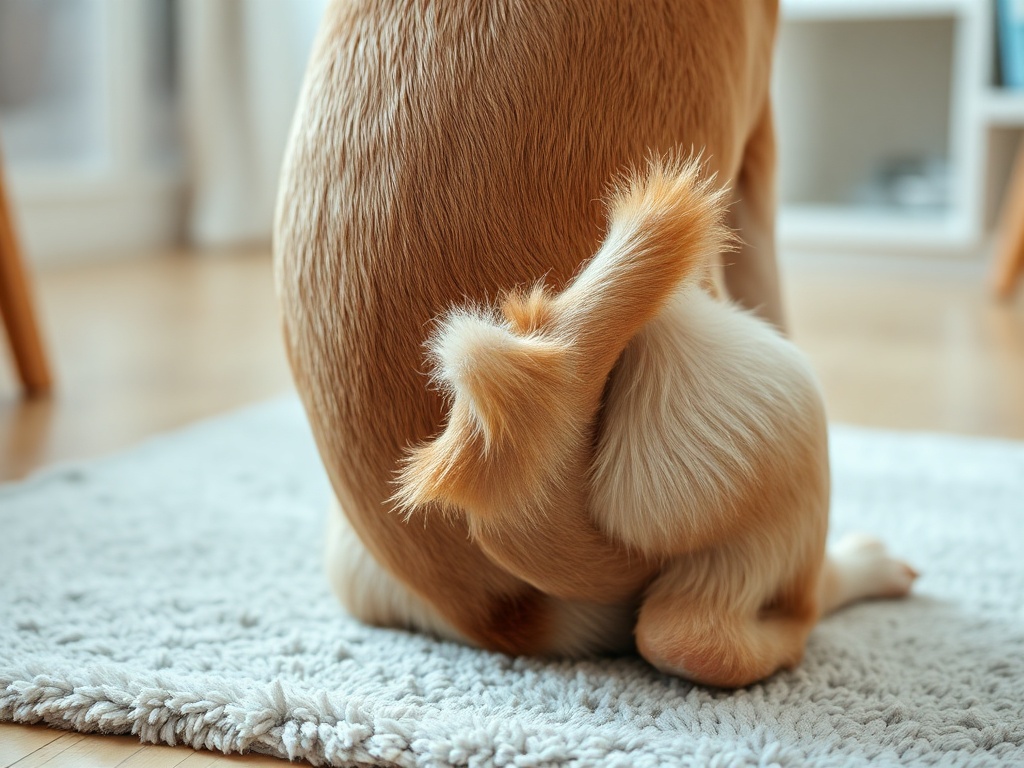
Physiological Responses and Medical Caveats
While the first two reasons are behavioral, the third reason for back-leg kicking is often medical. Dogs cannot tell us when they have a 'pins and needles' sensation or a dull ache in their joints. Instead, they may kick their legs out or scrape them against the ground to alleviate discomfort.
One common medical cause is atopic dermatitis or environmental allergies. Approximately 10–15% of dogs suffer from skin allergies that cause intense itching between the toes. If a dog is kicking or scraping its back legs frequently throughout the day—not just after pottying or before bed—it may be trying to scratch an itch it cannot reach. This is often accompanied by the dog licking its paws for more than 5 minutes at a time.
Another serious consideration is musculoskeletal issues. Conditions like luxating patella (where the kneecap slides out of place) or early-onset arthritis can cause a dog to kick a leg out to 'reset' the joint or relieve pressure. In senior dogs, 20% or more may experience some form of degenerative joint disease (according to general veterinary estimates for aging canines). If the kicking looks more like a sudden 'spasm' or if the dog limps for 2–3 steps after kicking, it is likely a physical ailment rather than a scent-marking behavior.
Furthermore, nerve irritation or 'fly-biting' syndrome (a type of focal seizure) can cause involuntary leg movements that look like kicking. This is a critical caveat: if the dog seems unaware that its leg is moving or if the kicking happens while the dog is standing perfectly still and looking confused, it is not a behavioral choice. This requires an immediate neurological evaluation.
Synthesizing the Behaviors: The Multi-Pet Dynamic
These three points do not exist in isolation. In a household with multiple dogs, the behavioral and physical aspects often overlap. A dog with mild arthritis (Medical) may feel more vulnerable and thus engage in more intense nesting (Instinctual) to feel safe from younger, more energetic housemates. Simultaneously, that same dog may feel the need to mark its territory (Communication) more frequently to maintain its status despite its physical decline.
Understanding the interplay between these factors is key for a pet owner. A sudden increase in kicking frequency is rarely random. It is usually a response to a change in the social environment (a new pet), a change in the physical environment (new flooring), or a change in the dog's internal comfort levels.
To decide whether to intervene, use the following two criteria:
Intensity vs. Context: Is the kicking happening only in logical contexts (after potty, before bed)? If the intensity is so high that the dog is bleeding from its paw pads or destroying its environment, the behavior has become compulsive and needs professional intervention.
Physical Symmetry: Does the dog kick with both legs equally, or is it always the same leg? Asymmetrical kicking or a 'hitch' in their gait is a strong indicator of a localized medical issue like a torn ligament or a thorn stuck in the paw.

Critical Caveats and What Readers May Miss
It is easy to misinterpret these signals if you only look at the legs. A dog's entire body language must be taken into account. Many owners miss the 'displacement behavior' aspect of kicking. Sometimes, a dog will kick its back legs when it is feeling conflicted or frustrated—such as when it wants to play but the other dog is ignoring it. This is a 'reset' mechanism for their nervous system.
Criteria to verify before assuming it is 'just a habit':
- Check the paws: Look for redness, swelling, or 'hot spots' between the toes.
- Observe the back: Is the dog's spine arched while kicking? This could indicate back pain.
- Monitor the duration: Does the kicking last for more than 30 seconds? Normal marking is usually brief (2–5 seconds). When this advice is not a fit: If your dog is a puppy under 4 months old, they may not have developed the scent-marking instinct yet. Kicking in very young puppies is more likely to be a lack of motor coordination or a reaction to a new sensation on their feet.
Conclusion
In summary, back-leg kicking in dogs is a multifaceted behavior driven by the need to communicate through scent, the instinct to create a safe and thermally stable nest, and the physical necessity of managing discomfort or irritation. By recognizing the difference between a confident territorial mark and a desperate attempt to soothe joint pain, owners can better support their pets' well-being.
To ensure your dog is healthy and happy, follow these three key points:
- Distinguish between social scent marking and compulsive digging.
- Provide appropriate 'nesting' materials to satisfy instinctual drives.
- Monitor for signs of physical distress, such as limping or paw-licking. One specific action to take today: Check your dog's back paw pads for any signs of cracking, redness, or debris. If the pads are healthy and the kicking only occurs after they go outside, you can safely assume it is a natural form of communication. If you find any irritation, schedule a check-up to rule out allergies or joint issues.
- Proceed: If the behavior is brief, occasional, and occurs in context (outside or on bedding).
- Pause: If the behavior increases in frequency or occurs on hard, inappropriate surfaces.
- Verify: Consult a veterinarian if the dog shows signs of pain, asymmetrical movement, or skin lesions.
Previous
Large Breed Dog Training: Essential Methods and Safety Precautions
Next
Why Dogs Kick Their Back Legs: 3 Key Reasons for Pet Owners
More in Pets

Pet First Aid Guide for Multi-Pet Households: Easy Steps for Beginners
Learn essential pet first aid tips for multi-pet households. Discover how to build a custom kit, handle choking, perform CPR, and coordinate emergencies.

Heartworm Prevention for Large Dogs: A Step-by-Step Home Guide
Heartworm prevention for large dogs requires precise dosing and consistency. Learn how to choose the right medication, manage schedules, and avoid common errors.

Introducing Two Dogs Successfully After a Failed First Attempt
Introducing two dogs requires a structured approach to prevent aggression. Follow this safety-first checklist to ensure a successful meeting and long-term peace.

Pet Birthday Party Ideas: Safety and Emergency Prep for Multi-Pet Homes
Explore pet birthday party ideas focused on safety and emergency prevention. Learn how to manage multi-pet dynamics, food risks, and stress during celebrations.