Dog walking tips and etiquette for new pet owners
Key Takeaways
Dog walking tips and etiquette are vital for new owners. Learn about gear, social rules, and safety protocols to ensure a happy and healthy experience for your pet.
Dog walking tips and etiquette for new pet owners
Have you ever watched a neighbor struggle as their dog lunged toward a passing car or tangled their leash around a stranger's legs during a morning walk? While walking a dog seems like the most natural part of pet ownership, it is actually a complex social activity that requires preparation, specific gear, and a deep understanding of canine behavior. For those preparing to bring a dog home for the first time, mastering these skills is the difference between a stressful chore and a bonding ritual.
- Disclaimer: This article provides general information only and does not constitute professional veterinary advice, diagnosis, treatment, or legal counsel regarding local leash laws. Always consult with a qualified veterinarian or a certified animal behaviorist for specific health or behavioral concerns. Verify local ordinances regarding leash lengths and restricted areas with your municipal government.
The Entry-Level Guide: Preparing for the First Walk
This section is designed for complete newcomers who are in the process of adopting or have just brought home a new dog and need to establish a safe routine. Before you even step out the door, your primary goal is safety and the prevention of common accidents.
Selecting the right gear is the first hurdle. Many new owners gravitate toward retractable leashes, but these are often a mistake for beginners. Personal observation suggests that retractable leashes contribute to a lack of control, as they allow a dog to gain 5 to 8 meters of momentum before the brake is applied. Instead, start with a fixed-length leash of approximately 1.5 meters. This length provides enough room for the dog to explore while keeping them close enough for you to intervene if they head toward traffic or a piece of discarded food.
For the dog's comfort, a well-fitted 'Y-shaped' harness is generally superior to a standard neck collar for walking. A harness distributes pressure across the chest and shoulders rather than the sensitive trachea. Specifically, if a dog gets spooked and bolts, a collar can slip over the head or cause neck strain, whereas a harness provides a secure point of contact. Ensure you can fit two fingers between the harness and the dog's skin to prevent chafing.
Finally, the 'entry-level' etiquette rule is simple: always carry more waste bags than you think you need. A common mistake is carrying only one bag for a 30-minute walk. In practice, many dogs will eliminate 2 or 3 times during a single excursion, especially if they are marking territory. Leaving waste behind is not just a social faux pas; in many cities, it carries fines ranging from $50 to $500 depending on the jurisdiction.
Next Steps: Navigating the Social Landscape
This level is for owners who have mastered the basic walk and are now encountering other people, dogs, and environmental triggers on a daily basis. At this stage, the focus shifts from 'surviving the walk' to 'managing the environment.'
One of the most critical dog walking tips and etiquette rules is the 'Three-Second Rule' for greetings. If you and another owner agree to let your dogs meet, keep the interaction to 3 seconds or less. This prevents the tension that naturally builds when two leashed dogs stare at each other for too long. After 3 seconds, use a cheerful voice to call your dog away and continue walking. This ensures the interaction ends on a positive, low-stress note.
Understanding body language is also essential. A wagging tail does not always mean a happy dog; a stiff, fast-moving tail held high can actually indicate over-arousal or impending aggression. Look for 'the freeze'—a moment where a dog becomes completely still while staring at another animal. If you see this, create distance immediately. For example, you can cross the street or step behind a parked car to break the line of sight. According to estimates from professional trainers, 80% of leash reactivity issues can be mitigated by simply maintaining a 'buffer zone' of 3 to 5 meters from other walkers.
Another intermediate skill is 'leash tension awareness.' If you walk with a tight, pulled leash, you are communicating your own stress to the dog. In practice, try to keep the leash in a 'J' shape—curving loosely between your hand and the harness. If the dog pulls, stop walking entirely. Wait for them to look back at you or step toward you, creating slack, before moving forward again. This teaches them that a tight leash results in a 'stop,' while a loose leash results in 'go.'
Advanced Considerations: Complexity and Enrichment
This section is for experienced handlers looking to optimize their dog's mental health or manage walks in high-distraction environments like busy city centers or crowded hiking trails. At this level, walking is no longer just about physical exercise; it is about mental stimulation.
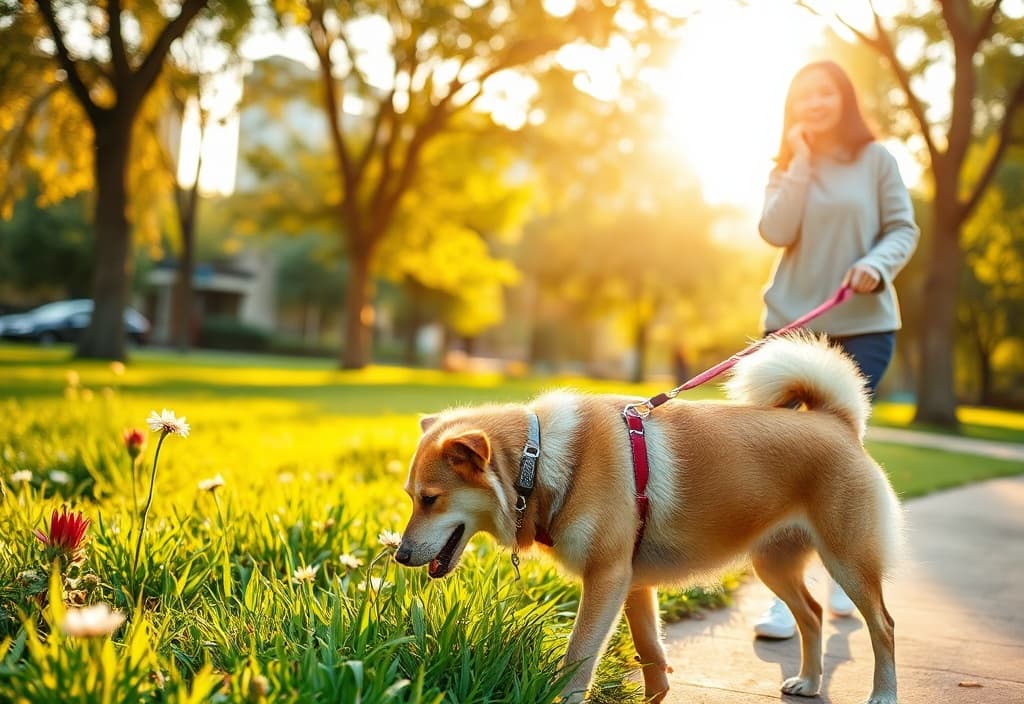
Consider implementing 'Sniffaris'—walks where the dog is allowed to lead the way and sniff whatever they want for as long as they want. While a structured walk is good for manners, a scent-focused walk is significantly more tiring for a dog's brain. Dogs have roughly 300 million olfactory receptors compared to a human's 6 million. Spending 15 minutes engaging in deep sniffing can be as mentally exhausting for a dog as a 45-minute brisk walk.
In high-distraction areas, advanced handlers use 'interval training.' For example, walk for 5 minutes, then ask for a 'sit' or 'stay' while a cyclist passes, then reward with a high-value treat. This builds a 'checking-in' habit where the dog looks to the owner for guidance whenever something exciting happens.
Safety at this level also involves 'environmental scanning.' Advanced walkers are always looking 20 to 30 meters ahead. They identify potential hazards—such as a child on a scooter, a loose cat, or a pile of broken glass—long before the dog notices them. This proactive approach prevents the dog from ever reaching a state of 'threshold' where they are too excited or scared to listen to commands.
Critical Caveats: When the Advice May Not Apply
While the tips above work for the majority of pets, there are specific scenarios where standard walking advice fails. It is important to recognize these 'red flags' to avoid putting your dog or the public at risk.
When Socialization is a Risk
If you have a 'reactive' dog—one that barks, lunges, or growls at others—the 'Three-Second Rule' does not apply. For these dogs, any close-range greeting is a failure of management. In these cases, your etiquette priority is not being 'friendly' to other owners, but maintaining enough distance to keep your dog under the 'reactivity threshold.' You may need to walk at off-peak hours (such as 10:00 PM or 6:00 AM) to ensure a successful experience.
Environmental Extremes
Standard walking durations (typically 30 to 60 minutes) must be discarded during extreme weather. On a sunny 30-degree Celsius day, asphalt can reach temperatures of over 50 degrees Celsius within minutes. Use the 'five-second rule': place the back of your hand on the pavement; if you cannot hold it there for 5 seconds, it is too hot for your dog's paws. In these conditions, walks should be limited to grass or moved to the very early morning.
The Myth of 'Heeling'
Many beginners believe a dog 'must' walk perfectly at their heel at all times. However, for many high-energy breeds or young puppies, this is physically and mentally taxing. Forcing a rigid heel for an entire walk can lead to frustration and increased pulling later. A better approach is to allow 'freedom zones' where the dog can explore, interspersed with short 'work zones' where they must walk closely.
How do you choose the right walking gear?
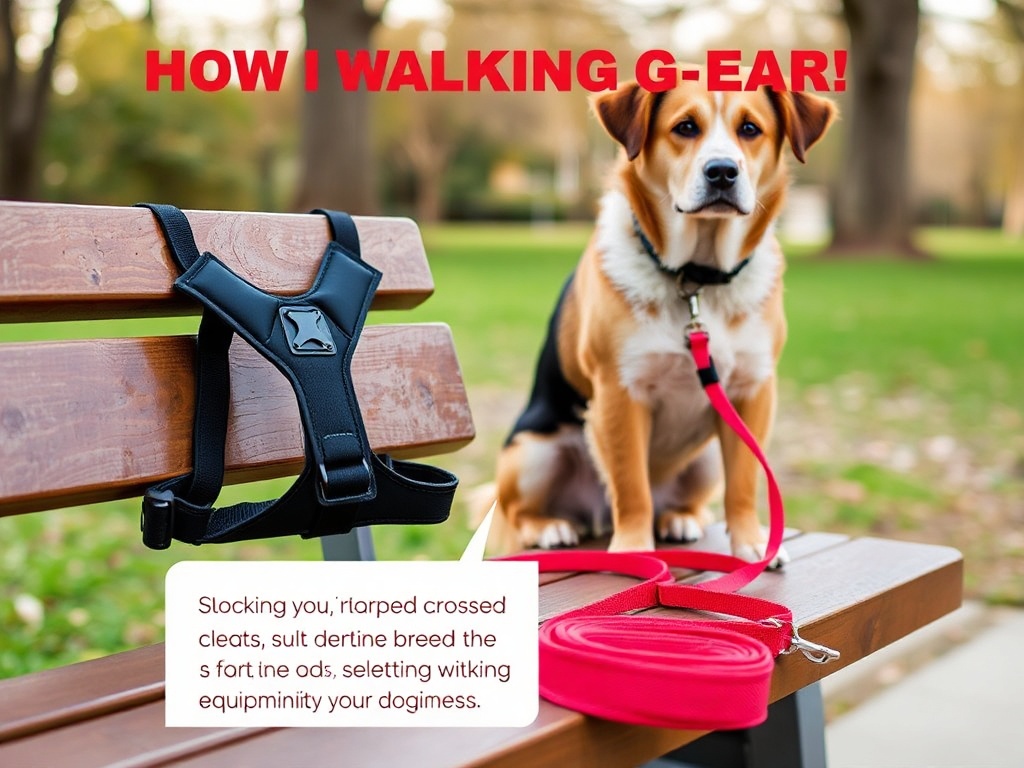
Choosing gear is the first major decision an owner makes, and it should be based on three criteria: safety, control, and the dog's physical build.
Safety: Does the gear have reflective stitching for night walks? Does the clip have a locking mechanism? For dogs that are 'escape artists,' a martingale collar or a multi-point harness is necessary to prevent them from backing out of the equipment.
Control: If you have a 30kg dog and you weigh 60kg, a standard flat collar gives you very little leverage if they lunge. A front-clip harness, where the leash attaches to the chest, redirects the dog's momentum back toward you, providing mechanical advantage without causing pain.
Cost vs. Longevity: Cheap nylon leashes often fray within 6 months. Investing in a high-quality Biothane or leather leash may cost $30 to $50 initially, but these materials are weather-resistant, easier on the hands, and can last the lifetime of the dog.
Why is leash etiquette critical for public safety?
Leash etiquette is not just about being polite; it is a framework for preventing physical injury and legal liability. When an owner allows their 'friendly' dog to run up to a leashed dog, they are ignoring the fact that the leashed dog might be in training, recovering from surgery, or fearful of other animals.
- Preventing Bites: Most dog bites occur when an animal feels cornered. A dog on a leash cannot use its 'flight' instinct, so it is more likely to resort to 'fight' if an unleashed dog enters its personal space.
- Protecting the Public: Not everyone loves dogs. Some people have severe phobias or allergies. Etiquette dictates that you should always shorten your leash when passing pedestrians, ensuring your dog stays on the side of you furthest from the stranger.
- Legal Protection: If an incident occurs and your dog was off-leash in a leashed zone, you are almost universally liable for damages, regardless of who 'started' the altercation.
Decision Criteria for Your Walking Routine
To determine the best walking plan for your specific situation, consider these two primary factors:
Factor 1: Risk Tolerance vs. Enrichment
If you live in a high-traffic city, your risk tolerance should be low. This means shorter leashes, no greetings with strangers, and high-value rewards for 'boring' behaviors like sitting at crosswalks. If you live in a rural area, you can prioritize enrichment with long-line leashes (5 to 10 meters) that allow for more natural movement and scent work.
Factor 2: Time and Energy Budget
Do not over-commit. It is better to provide two high-quality 20-minute walks with training and sniffing than one 40-minute 'power walk' where you are distracted by your phone. If you have limited time, focus on the 'Advanced' tip of mental enrichment through sniffing to tire your dog out faster.
Summary and Next Steps
To ensure your future walks are successful, remember these three core principles:
Gear Matters: Use a fixed 1.5-meter leash and a Y-shaped harness for maximum safety and control.
Respect Space: Follow the 'Three-Second Rule' for greetings and never allow your dog to approach others without explicit permission.
Prioritize Scent: Mental fatigue from sniffing is just as important as physical exercise for a well-behaved dog. Your action step for today: If you are a prospective owner, visit a local pet store and practice holding a 1.5-meter leash. Feel the weight and see how much distance it actually covers. If you already have a dog, commit to one 10-minute 'Sniffari' today where the dog chooses the direction and the pace.
Previous
Pet rescue activities: How to get involved as a beginner
Next
Dog walking tips and etiquette for new pet owners
More in Pets

Pet First Aid Guide for Multi-Pet Households: Easy Steps for Beginners
Learn essential pet first aid tips for multi-pet households. Discover how to build a custom kit, handle choking, perform CPR, and coordinate emergencies.

Heartworm Prevention for Large Dogs: A Step-by-Step Home Guide
Heartworm prevention for large dogs requires precise dosing and consistency. Learn how to choose the right medication, manage schedules, and avoid common errors.

Introducing Two Dogs Successfully After a Failed First Attempt
Introducing two dogs requires a structured approach to prevent aggression. Follow this safety-first checklist to ensure a successful meeting and long-term peace.

Pet Birthday Party Ideas: Safety and Emergency Prep for Multi-Pet Homes
Explore pet birthday party ideas focused on safety and emergency prevention. Learn how to manage multi-pet dynamics, food risks, and stress during celebrations.