Homemade Naengmyeon: Bulk Prep and Storage Guide for One
Key Takeaways
Homemade Naengmyeon is only efficient if you bulk prep. This guide explains how to batch-cook noodles and broth for solo dwellers without the daily mess.
Homemade Naengmyeon: Bulk Prep and Storage Guide for One
Please note that this article provides general information regarding food preparation and storage only. It is not professional nutritional advice or a certified food safety guide. If you have specific dietary needs or concerns about foodborne illnesses, please consult a qualified food safety professional or a nutritionist.
The short answer is that making Naengmyeon at home is only efficient for solo dwellers if you treat it as a bulk production task rather than a single-serving meal. Here is why. The preparation for a single bowl of Korean cold noodles involves boiling a large volume of water, preparing an ice bath, and cleaning starch-heavy pots, which can take 25 to 30 minutes for a meal consumed in 5 minutes. By prepping 6 to 8 servings at once and freezing them properly, you reduce the per-meal labor to under 10 minutes.
In my eight years of solo living, I have realized that complexity is the enemy of consistency. If a recipe requires me to shave ice by hand every single Tuesday, I will simply stop making it. This guide focuses on a high-yield, low-maintenance method that prioritizes storage and speed over culinary perfection.
What you need for bulk Naengmyeon preparation
Before you start, you need to shift your mindset from 'cooking a meal' to 'stocking an inventory.' You are essentially creating your own high-quality 'instant' kits.
Essential Tools
- A large stock pot with at least a 6-liter capacity to prevent starch boil-over.
- A fine-mesh stainless steel strainer for rapid rinsing.
- At least 8 airtight freezer bags or 500ml rectangular containers.
- A digital kitchen scale to ensure consistent 150g to 200g noodle portions.
- A large mixing bowl for the ice-water shock process.
Materials and Ingredients
- 1 kilogram of dried or semi-dried buckwheat noodles (Naengmyeon).
- 3 to 4 liters of high-quality broth (either store-bought concentrates or homemade beef/dongchimi mix).
- Vinegar, mustard oil, and sugar for seasoning adjustments.
- 2 kilograms of ice (you will need more than you think for the rinsing stage).
The Step-by-Step Bulk Process
The goal here is to minimize the gummy texture that often plagues leftover noodles while maximizing the convenience of the broth. This process should take about 45 minutes from start to finish.
1. Prepare the Broth Base
Do not freeze broth in one giant container. Instead, divide 3 liters of broth into 500ml portions. This is the standard volume for a single adult serving.
- The Step: Pour the broth into freezer bags, squeeze out the air, and lay them flat on a baking sheet in the freezer.
- Common Failure Point: Filling containers to the brim. Liquid expands when frozen; if you do not leave at least 10 percent of the container as empty space, the lid will pop or the bag will burst.
2. Boil the Noodles in Batches
Never try to boil 1 kilogram of Naengmyeon noodles at once unless you have a commercial-grade burner. The water temperature will drop too significantly, resulting in soggy noodles.
- The Step: Divide the noodles into two batches of 500 grams. Boil 4 liters of water for each batch. Once the water is at a rolling boil, add the noodles and stir constantly with long chopsticks for 40 to 60 seconds (check the package for specific timing, as some starch-based noodles only need 30 seconds).
- Common Failure Point: Leaving the noodles unattended. Naengmyeon noodles release a high amount of starch, causing the water to foam and boil over within seconds. You must stay at the stove.
3. The Intensive Rinse and Shock
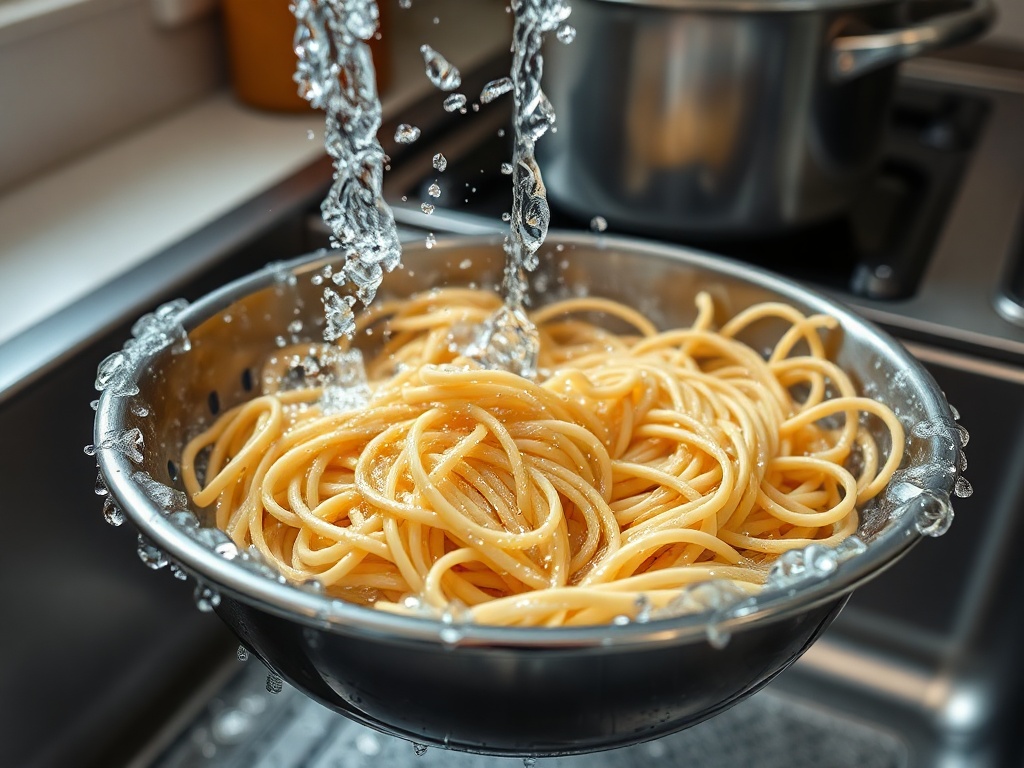
This is the most critical stage for texture. You are not just cooling the noodles; you are physically scrubbing the excess starch off them.
- The Step: Immediately transfer the boiled noodles into a bowl of ice water. Rub the noodles vigorously between your palms as if you are washing clothes. Rinse them at least 3 to 4 times in fresh cold water until the water runs clear and the noodles feel slippery and firm, not slimy.
- Common Failure Point: Using lukewarm tap water. If the water is not near freezing (0 to 4 degrees Celsius), the noodles will continue to cook internally, losing their signature 'chew.'
4. Portioning and Pre-Freezing
For a solo dweller, portioning is what makes this method sustainable.
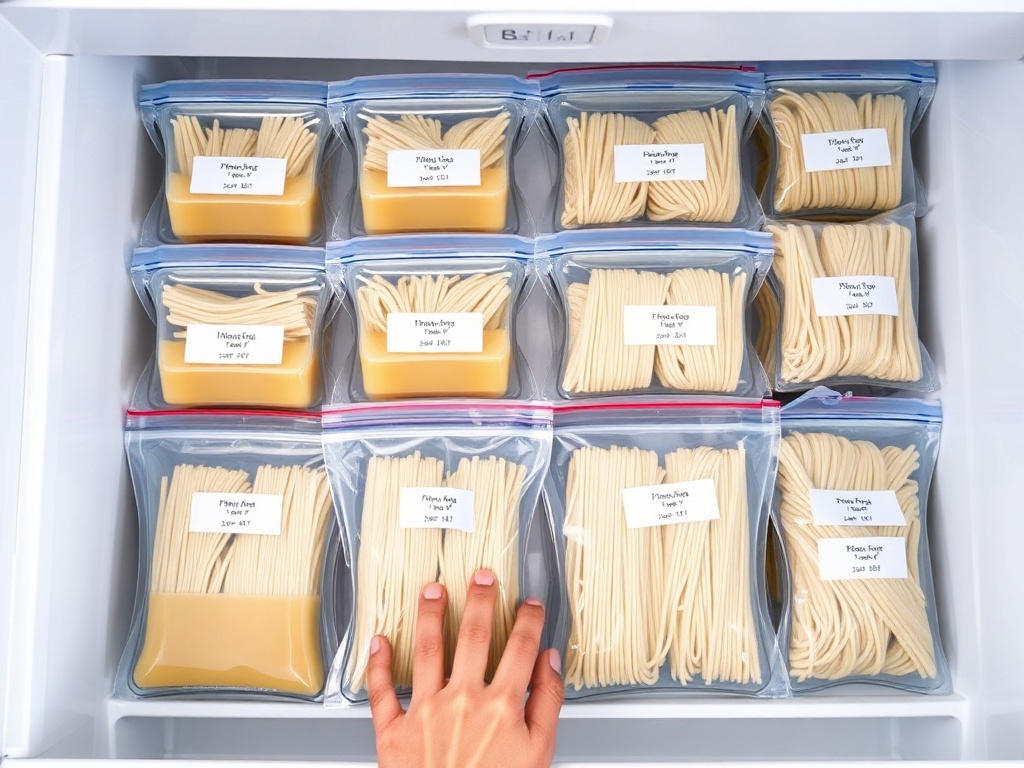
- The Step: Use your kitchen scale to measure 200g 'nests' of noodles. Twist them into a ball shape. If you plan to eat them within 48 hours, store them in the fridge in an airtight container with a damp paper towel. For longer storage, place the nests on a tray, flash-freeze them for 2 hours, and then move them into individual bags.
- Common Failure Point: Freezing wet noodles in a big heap. They will fuse into a single block of ice that is impossible to separate without re-boiling, which ruins the texture.
How to know if your bulk prep worked
Success in bulk-prepped Naengmyeon is measured by three criteria: texture, temperature, and time-to-table.
First, the texture of the noodles after being stored should still have a 'snap.' If you pull a noodle and it breaks instantly without stretching, it was likely overcooked or not rinsed enough. In my experience, a successful batch remains elastic even after 2 days in the refrigerator if kept at the correct humidity.
Second, the broth should reach a 'slushy' state. If you can break the ice with a spoon and it looks like a granita, you have succeeded. If it is a solid block of ice that requires 20 minutes of thawing, the portion size or the container shape was likely too thick.
Finally, the time-to-table should be under 5 minutes. If you find yourself having to boil water again or spend 10 minutes cleaning up a new mess, the 'bulk' aspect of the prep has failed. A successful system allows you to simply combine the pre-portioned nest and the semi-thawed broth in a bowl and eat immediately.
Tips to improve your homemade cold noodles
Use a 50/50 Broth Mix
Many people find that pure beef broth is too heavy and pure radish water (dongchimi) is too tart. In practice, a 1:1 ratio of these two liquids provides the most balanced flavor profile. If you are using store-bought concentrates, try mixing one pack of 'beef flavor' with a splash of juice from a jar of pickled radishes.
The Vinegar-Mustard Balance
Cold numbs the taste buds. This means that a broth that tastes perfectly seasoned at room temperature will taste bland once it is icy. Specifically, you should add 10 to 15 percent more vinegar and mustard than you think you need. For a 500ml serving, start with 1 tablespoon of vinegar and 1/2 tablespoon of prepared mustard.
Proper Freezer Organization
To make this work for a solo lifestyle, you need to manage your freezer space. For more on this, you might look into [freezer organization for solo living] to ensure your noodle nests don't get crushed under frozen meat. Additionally, keeping a dedicated 'noodle zone' helps you track how many servings you have left.
The Topping Strategy
Do not bulk-prep the toppings. Hard-boiled eggs, sliced cucumbers, and pears should be added fresh. A hard-boiled egg only lasts about 2 to 3 days in the fridge before the texture of the white becomes rubbery. Slicing half a cucumber takes exactly 60 seconds; it is worth the effort for the crunch.
Why this advice may fail or not apply
While bulk prepping is a life-saver for some, it is not a universal solution. There are several scenarios where this method might be more trouble than it is worth.
- Small Freezer Constraints: If you live in a studio apartment with a 'dorm-style' freezer, you likely do not have the 15 to 20 liters of space required to store 8 servings of broth and noodles effectively. The temperature fluctuations in small freezers can also cause faster freezer burn.
- Texture Sensitivity: If you are a 'noodle purist' who demands the exact 100 percent chewiness of a restaurant, you will be disappointed by frozen or even 2-day refrigerated noodles. The starch retrogradation process begins the moment the noodles cool down.
- Sodium Concerns: Naengmyeon broth is notoriously high in sodium. According to various food database estimates, a single serving can contain 1,500mg to 2,500mg of sodium. If you are on a low-sodium diet for medical reasons, bulk-consuming this meal is not recommended without significant modifications to the recipe.
Critical caveats and decision criteria
When deciding whether to start a bulk-prep session, use the following two criteria to evaluate your situation.
1. The Cost-to-Labor Ratio
A single bowl of Naengmyeon at a restaurant in 2024 can cost between 12,000 and 16,000 KRW. Making it at home reduces the cost to approximately 3,000 to 4,000 KRW per serving. However, if your hourly 'personal rate' is high and you only plan to eat this once a month, the 60 minutes of prep and cleanup makes the restaurant option more logical. Only proceed if you plan to eat at least 3 servings per week.
2. Equipment Capability
Do you have a high-BTU stove? Naengmyeon noodles need to hit boiling water and stay at a boil. If your stove takes 15 minutes just to boil 4 liters of water, bulk prepping will become a multi-hour ordeal that you will likely abandon halfway through. Check your equipment before committing to a 1kg batch of noodles.
What readers may miss
One thing people often overlook is the 'starch factor' in the plumbing. If you pour a gallon of starch-heavy, boiling-hot noodle water down a kitchen sink with old PVC pipes, you risk softening the joints or creating a thick starch clog over time. Always run cold water simultaneously when draining the pot to dilute the heat and the starch.
Summary and Next Steps
To successfully transition to a bulk Naengmyeon system, remember these three key points:
- Rinse until the water is clear: This is the only way to prevent the noodles from becoming a gummy brick in storage.
- Portion before freezing: Single-serving bags (500ml for broth, 200g for noodles) are the foundation of a quick solo meal.
- Balance the broth for cold temperatures: Add extra acidity and spice to compensate for the numbing effect of the ice. Your action for today: Check your freezer space. If you have enough room for four flat-laid freezer bags, go to the store and buy a 4-pack of Naengmyeon broth and a small pack of noodles. Try prepping just two 'kits' this weekend to see if the texture meets your standards before committing to a full 1kg batch.
Previous
Egg Recipes for Kids and Healthy Ingredient Substitutions
Next
Homemade Naengmyeon: Bulk Prep and Storage Guide for One
More in Recipes
Easy 5-Ingredient Pork Suyuk: The Ultimate High-Protein Diet Recipe
Discover a simple 5-ingredient Korean boiled pork (Suyuk) recipe that takes just 50 minutes. Perfect for a high-protein, low-calorie diet that keeps you full.
Tofu Kimchi Recipe: Quick Ways to Use Fridge Leftovers
Learn a simple Tofu Kimchi recipe to clear out your fridge. Discover freezer-friendly meal prep tips, common beginner mistakes, and quick cleanup hacks.
Vegetarian guest hosting recipes you can prep on weekends
Vegetarian guest hosting recipes made easy. Learn how to prep plant-based dishes on weekends, freeze them safely, and master smart ingredient substitutions.
How to Bake Bread in a Small Kitchen with Minimal Cleanup
Learn how to bake homemade bread in a small kitchen with minimal cleanup. This guide covers no-knead methods, diet-friendly tips, and office lunch ideas.