Cat Litter Box Hygiene Strategies for Large Dog Households
Key Takeaways
Learn how to manage cat litter box hygiene in homes with large dogs. Prevent coprophagia and maintain a sterile environment with our comprehensive checklist.
Cat Litter Box Hygiene Strategies for Large Dog Households
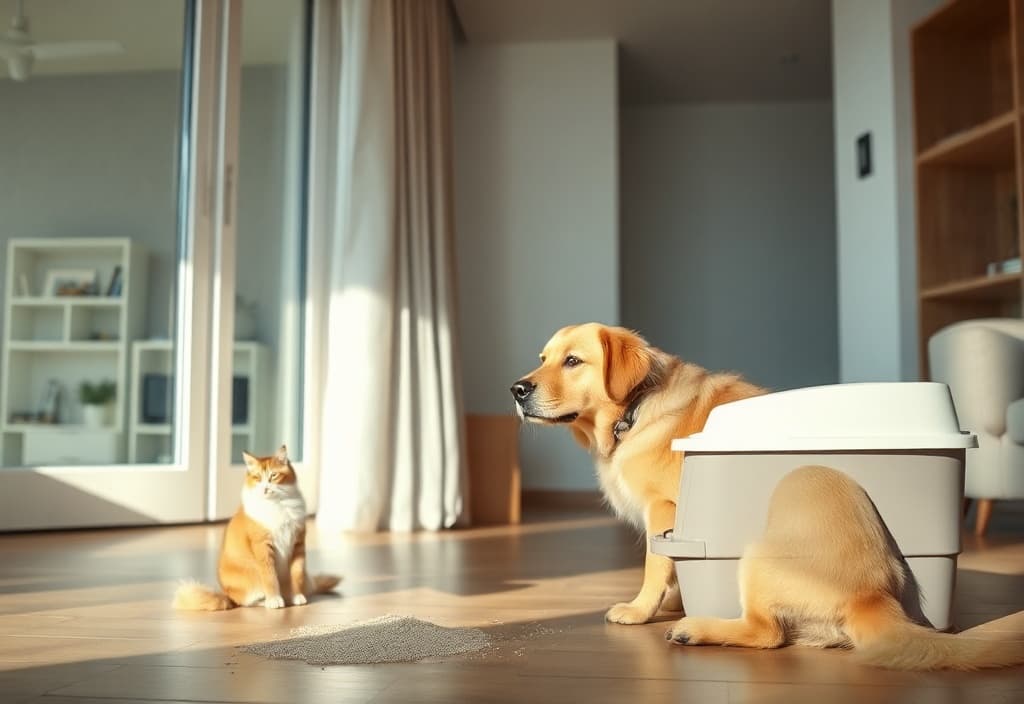
The short answer is that maintaining cat litter box cleanliness in a home with large dogs requires a strict physical separation of species and a rigorous chemical sanitization schedule. Here is why. Large dogs are frequently drawn to cat litter boxes due to a behavioral trait known as coprophagia, where they ingest feline waste, leading to the spread of fecal coliform bacteria throughout your home via the dog's saliva and coat. Furthermore, the presence of a large, inquisitive canine can cause 'litter box aversion' in cats, leading to inappropriate elimination elsewhere if the cat does not feel secure while vulnerable.
This guide provides general information regarding household hygiene and animal behavior. It is not a substitute for professional veterinary advice, diagnosis, or treatment. If your dog habitually consumes non-food items or your cat stops using the litter box, consult a qualified veterinarian or a certified animal behaviorist to rule out underlying medical issues.
Common Misconceptions About Multi-Pet Hygiene
Many owners of both cats and large dogs operate under several assumptions that can compromise the health of both animals. Recognizing these misconceptions is the first step toward a cleaner home.
Myth 1: Large Dogs Naturally Avoid Cat Waste
There is a common belief that dogs find cat feces as repulsive as humans do. In reality, cat food is significantly higher in protein than dog food, and the resulting waste often contains undigested proteins and fats that are highly attractive to the canine olfactory system. According to a 2018 survey conducted by the American Kennel Club (AKC), approximately 16 percent of dogs are classified as 'serious' stool eaters, having been caught in the act at least five times. For a large dog, a cat's litter box is often perceived as a 'snack bar' rather than a waste site.
Myth 2: Scented Litter Solves the Odor Problem
Owners often assume that heavy perfumes in litter will mask the smell for everyone in the house. However, a dog's sense of smell is roughly 10,000 to 100,000 times more acute than a human's. What smells like 'fresh linen' to a person can be an overwhelming chemical assault for a dog or a cat. Furthermore, scented litters only mask the ammonia rather than neutralizing the bacteria causing the scent. If a dog is attracted to the box, the perfume will not act as a deterrent; it may even pique their curiosity further.
Myth 3: Scooping Once a Day is Sufficient
In a single-cat household without other pets, once-daily scooping might be the norm. However, in a multi-pet home where a large dog has access to the area, the risk of cross-contamination increases exponentially. Every hour that waste sits in the box is an hour that the dog might investigate it or the cat might track pathogens onto shared furniture. For these environments, the standard must be higher to maintain a sterile living space.
The Reality of Bacterial Management and Spatial Needs
To correct these misconceptions, we must look at the biological reality of feline and canine interactions. Cat feces can harbor Toxoplasma gondii, a parasite that poses risks to both dogs and humans. When a large dog enters a cat's bathroom area, they do not just risk ingestion; they also transfer microscopic particles via their paws.
Research published in the Journal of Feline Medicine and Surgery suggests that cats require a litter box that is at least 1.5 times the length of their body from the nose to the base of the tail. For a standard 4kg cat, this means a box at least 50cm long. In a home with a large dog, providing this space while keeping it 'dog-proof' is a significant design challenge. If the box is too small or enclosed (like many dog-proof furniture options), the cat may develop respiratory issues from concentrated ammonia or simply refuse to use it.
Practical Guidance for a Clean Multi-Pet Environment
Effective management relies on a combination of physical barriers, the right substrate, and a consistent cleaning protocol. Use the following criteria to evaluate your current setup: accessibility for the cat, exclusion of the dog, and ease of sanitization.
1. Implement Physical Barriers
The most effective way to manage hygiene is to ensure the dog cannot physically reach the box. For large dogs, this is often easier than with small dogs because they cannot fit through small openings.
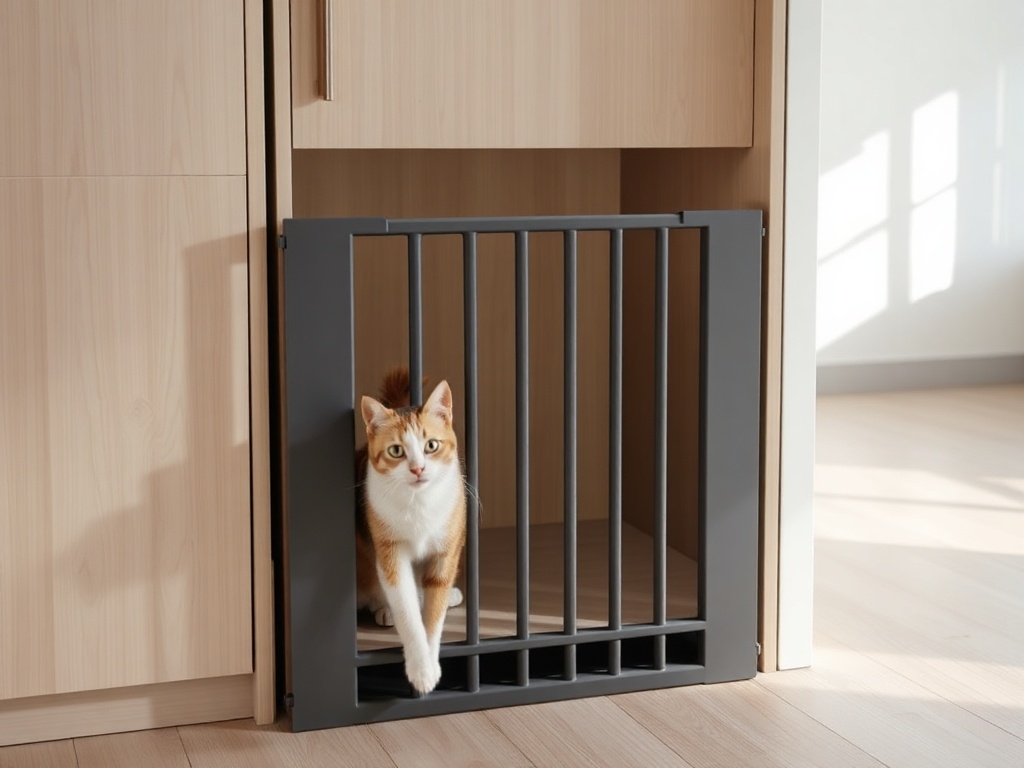
- Baby Gates with Pet Doors: Install a baby gate at the entrance of the laundry room or bathroom. Choose a model with a small cat-sized door at the bottom. A 30kg Golden Retriever or Labrador will be unable to squeeze through, while the cat has 24-hour access.
- Top-Entry Litter Boxes: These are effective for preventing dogs from 'snacking,' but they are not suitable for senior cats with arthritis or kittens. Specifically, if your cat is over 10 years old, the jump required for a top-entry box may lead to joint pain.
- Door Latches: Use a specialized hook-and-eye latch that keeps the door propped open exactly 10–12cm. This allows a cat to enter but prevents a large dog from pushing the door open.
2. Choose the Right Substrate
For multi-pet homes, the 'tracking' of litter is a major hygiene concern. If a dog walks through the area where a cat has kicked out litter, those granules will stick to the dog's large paws and be distributed onto your rugs or sofa.
- High-Density Clumping Clay: These form hard clumps within 2–3 minutes, making it easier to remove waste before a dog finds it.
- Silica Gel Crystals: These are excellent for moisture absorption and odor control, but they can be painful if stepped on by a heavy dog, and they are toxic if ingested in large quantities.
- Pellet Systems: Large pine or paper pellets are less likely to stick to paws. In practice, using a sifting box with pellets can reduce tracking by up to 80 percent compared to fine-grain clay.
3. The Deep Cleaning Protocol
Scooping is only the surface level of hygiene. To truly manage a home with large animals, you must follow a structured sanitization schedule.
- Twice-Daily Scooping: Remove solids and clumps every 12 hours. This reduces the 'attraction' factor for the dog.
- Weekly Surface Wipe-down: Use a pet-safe, enzymatic cleaner to wipe the outer edges and the lid of the box. Dogs often lick these surfaces.
- Monthly Full Reset: Once every 30 days, empty all litter. Scrub the box with hot water (at least 60 degrees Celsius) and unscented soap. Avoid ammonia-based cleaners, as cat urine contains ammonia and the smell may encourage the cat to spray outside the box.
- Mat Maintenance: Place a heavy-duty, double-layer trapping mat under the box. Vacuum this mat 3 times per week to ensure no granules are picked up by the dog's fur.
Critical Caveats and When to Re-evaluate
While the steps above work for most, there are situations where these recommendations may fail. If you have a 'velcro dog' who follows you everywhere, they may wait until you are cleaning the box to dive in. In such cases, you must move the dog to a different room before starting the maintenance.
When This Advice May Not Apply
- High-Drive Dogs: Some breeds with high food drives, such as Beagles or certain Terriers (even if they are on the larger side), may be persistent enough to break through flimsy plastic gates. In these cases, permanent structural changes like a cat-flap in a solid wood door are necessary.
- Multi-Cat Stress: If you have multiple cats, the 'N+1' rule (one box per cat plus one extra) is vital. If you try to consolidate all boxes into one dog-proof room, you may trigger territorial aggression between the cats.
- Mobility Issues: As mentioned, top-entry boxes or those behind high gates are a 'fail' for aging pets. If your cat can no longer jump, you must prioritize the cat's access over the dog's exclusion and perhaps use a 'scat mat' or ultrasonic deterrent that is tuned specifically to the dog's height.
Decision Criteria for Owners
When choosing your management style, consider these two factors:
Risk Tolerance: If your dog has a sensitive stomach or a history of pica (eating non-food items), your exclusion methods must be 100% physical (doors/latches) rather than behavioral (training).
Time Investment: If you cannot commit to twice-daily scooping, an enclosed automatic box is the only way to maintain hygiene in a multi-pet home, despite the higher cost (usually ranging from $300 to $600).

Summary and Next Steps
To maintain a hygienic environment for your cat and your large dog, remember these three core principles:
- Physical Separation: Use gates or specialized latches to ensure the dog cannot reach the waste site.
- Enzymatic Cleaning: Use cleaners that break down proteins rather than just masking smells with perfume.
- Consistency: Follow a strict 12-hour scooping and 30-day deep-clean cycle to prevent bacterial bloom. Your Action Step for Today: Check the 'tracking' distance around your cat's litter box. If you find litter granules more than 1 meter away from the box, your dog is likely picking them up on their paws. Invest in a high-sided box or a better trapping mat immediately to contain the spread of bacteria.
Previous
Cat Constipation Solutions: Effective Relief for Your Feline
Next
Cat Litter Box Hygiene Strategies for Large Dog Households
More in Pets

Pet First Aid Guide for Multi-Pet Households: Easy Steps for Beginners
Learn essential pet first aid tips for multi-pet households. Discover how to build a custom kit, handle choking, perform CPR, and coordinate emergencies.

Heartworm Prevention for Large Dogs: A Step-by-Step Home Guide
Heartworm prevention for large dogs requires precise dosing and consistency. Learn how to choose the right medication, manage schedules, and avoid common errors.
Introducing Two Dogs Successfully After a Failed First Attempt
Introducing two dogs requires a structured approach to prevent aggression. Follow this safety-first checklist to ensure a successful meeting and long-term peace.
Pet Birthday Party Ideas: Safety and Emergency Prep for Multi-Pet Homes
Explore pet birthday party ideas focused on safety and emergency prevention. Learn how to manage multi-pet dynamics, food risks, and stress during celebrations.