Large Breed Dog Training: Essential Methods and Safety Precautions
Key Takeaways
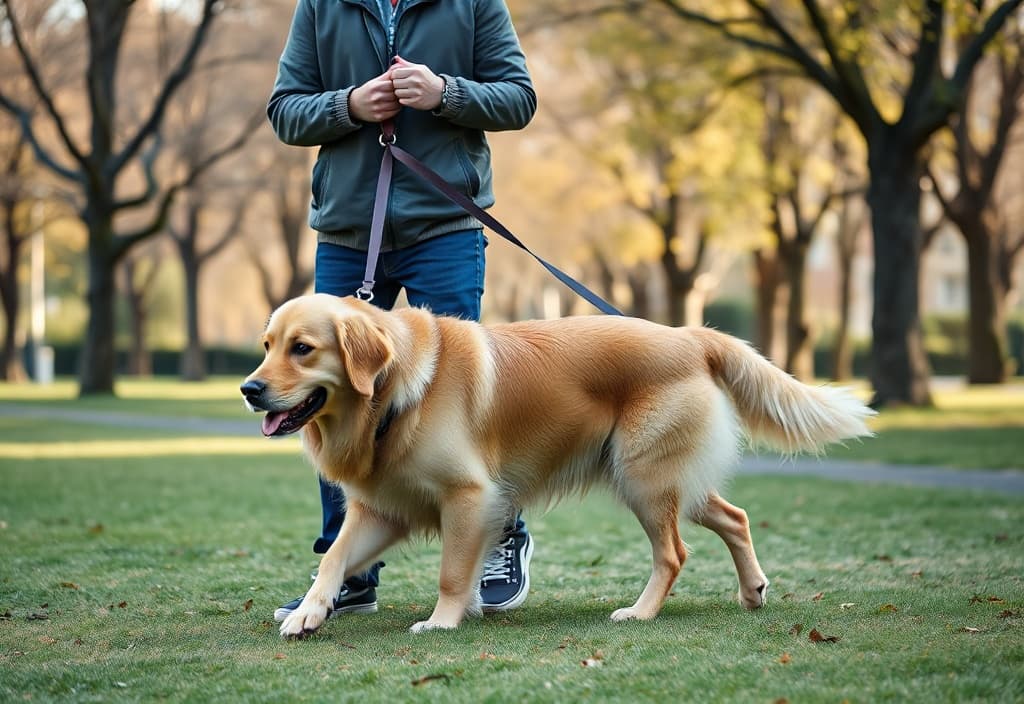
Large breed dog training requires specific safety precautions due to their size and strength. Learn essential methods, emergency protocols, and critical caveats.
Large Breed Dog Training: Essential Methods and Safety Precautions
A friend of mine once found themselves in a terrifying situation while walking a 45kg Alaskan Malamute in a busy suburban park. The dog, usually calm, spotted a stray cat and lunged with such force that my friend was pulled off their feet, sliding across the pavement and losing hold of the leash. The dog ended up in the middle of a four-lane road, narrowly missing a delivery truck. This incident was not a failure of affection or basic intent, but a failure of physical management and emergency protocol specific to large-sized animals. It serves as a stark reminder that when it comes to large breeds, training is not just about manners; it is about public safety and survival.
This article provides general information regarding dog training and emergency handling. It is not a substitute for professional behavioral consultation or veterinary advice. If your dog exhibits severe aggression or if you are physically unable to control them, please consult a certified professional trainer or veterinary behaviorist immediately.
Why is Large Breed Training Different from Small Breed Training?
The fundamental principles of operant conditioning apply to all dogs, but the stakes and physical mechanics change drastically as body mass increases. A 5kg dog jumping on a guest is a nuisance; a 40kg dog jumping on a guest is a liability that can cause broken bones or concussions. According to personal observations in urban training environments, approximately 70% of large breed rehoming cases stem from 'unmanageable size' rather than inherent malice.
When we compare training approaches for large breeds, we must look at three primary categories: Lure-Reward Training, Management-Based Training, and Correction-Based Training. Each has distinct implications for the safety of a large animal and its handler.
Lure-Reward Training
This method uses high-value treats or toys to guide the dog into desired positions. For large breeds, this is highly effective for building a positive association with commands. However, it can fail in high-arousal emergency situations where the 'lure' (a piece of chicken) is less interesting than the 'distraction' (a fleeing squirrel).
Management-Based Training
This focuses on environmental control and specialized gear, such as front-clip harnesses or head halters. This is often the most critical component for large breed owners because it provides the physical leverage necessary to prevent accidents while the dog is still learning. It does not 'teach' the dog to behave, but it prevents them from practicing bad behaviors.
Correction-Based Training
Historically, large dogs were often trained using physical corrections to 'match' their strength. However, modern research, such as studies cited by the American Veterinary Society of Animal Behavior (AVSAB), suggests that aversive methods can increase fallout, such as fear-based aggression. In a large breed, fear-based aggression is significantly more dangerous to the owner than in a small breed.
What are the Core Criteria for Choosing a Training Method?
Before deciding on a specific training regimen, large breed owners should evaluate their situation based on two primary decision criteria: physical leverage and the dog's prey drive.
Physical Leverage and Handler Strength
You must be honest about your ability to physically restrain your dog if all training fails. If the dog weighs more than 50% of your own body weight, relying solely on physical strength is a losing strategy. In these cases, management-based training with tools like a front-clip harness is mandatory to ensure you can redirect the dog's shoulders without needing massive upper-body strength.
Environmental Risk and Prey Drive
A dog living in a rural area with a fenced yard has a different risk profile than a dog living in a high-density city. If your large breed has a high prey drive—common in breeds like Greyhounds, Huskies, or Terriers—your training must prioritize an 'emergency stop' or 'emergency recall' above all other tricks. The cost of a failed recall in a city environment is significantly higher than in a controlled indoor space.
How Should Owners Handle Emergency Situations?
Basic training often fails during the 'adrenaline dump' of an emergency. For large breed owners, having a pre-rehearsed emergency protocol is vital. When a 35kg or larger dog enters a state of high arousal, their cognitive brain often shuts down, and they operate on instinct.
The Emergency U-Turn
If you see a trigger (another dog, a cat, or a loud vehicle) approaching and you know your dog is about to reach their threshold, do not try to force them to 'sit' and 'stay.' Instead, perform an emergency U-turn. This involves a 180-degree turn while using a specific verbal cue like 'Let's go!' and moving rapidly in the opposite direction. The goal is to use the dog's own momentum to move them away from the danger before they lock onto the target.
The Anchor Technique
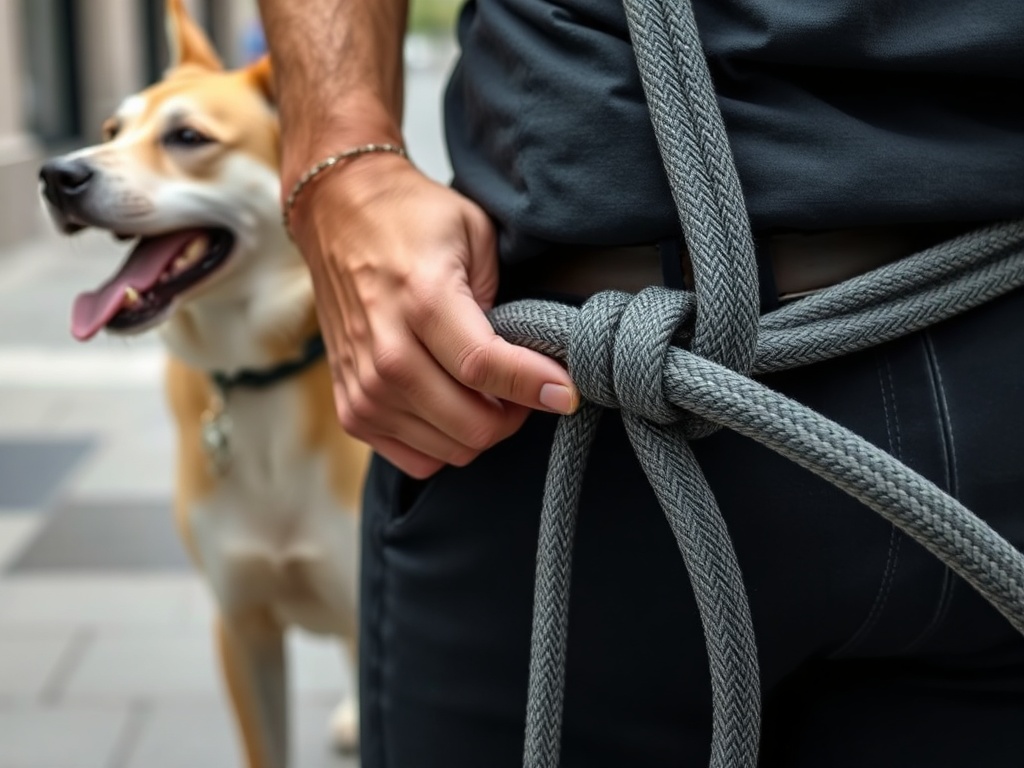
In a situation where a large dog is already lunging, trying to pull back with your arms often leads to the handler being pulled over. Instead, 'anchor' yourself. Drop your center of gravity by bending your knees and tucking the leash handle against your hip or core. Use your body weight, not your arm strength, to hold the line. Specifically, if a dog weighs 40kg, they can exert a momentary force of over 100kg during a lunge. Anchoring to your core protects your shoulders and provides maximum stability.
Immediate Post-Incident Check
After an emergency encounter, check your gear. A 2023 informal survey of large dog owners suggested that nearly 15% of leash failures occur during or immediately after a high-tension lunging event. Inspect the stitching on the leash and the metal clip for any signs of bending or fraying. If the dog was wearing a collar, check for neck sensitivity, as a high-impact lunge can cause tracheal or spinal bruising.
When Does Standard Training Advice Fail?
It is a common mistake to assume that a dog who listens perfectly in the living room will listen perfectly on the street. There are several specific scenarios where standard basic training will likely fail for a large breed.
- Medical Underlying Issues: If a large dog suddenly becomes reactive or refuses to 'sit,' it may be due to joint pain or hip dysplasia, which is common in breeds like German Shepherds or Labradors. In this case, 'training' harder will only increase the dog's distress.
- Predatory Drift: In off-leash settings, a large dog may be playing well with a smaller dog until the smaller dog squeaks or runs fast, triggering a predatory response. Standard 'come' commands often fail here because the instinctual drive is too high.
- Equipment Failure: Many standard flat collars can slip over a dog's head if they back away in fear. For large dogs, this results in a loose, powerful animal in a state of panic. choosing the right harness for large dogs
Critical Caveats and What You May Miss
One of the biggest mistakes owners make is overestimating the reliability of 'voice control.' While having a dog that listens to verbal cues is the goal, the reality of physics cannot be ignored.
The Illusion of Control
Many owners believe that because their dog is 'friendly,' they do not need to master emergency restraint. However, friendliness does not prevent a dog from running into traffic to greet someone. You must verify your dog's 'stay' command with increasing levels of distraction. If your dog cannot stay for 30 seconds while a ball is thrown 3 meters away, they are not ready for off-leash or long-leash environments.
The Physical Toll on the Handler
Training a large breed is physically demanding. If you suffer from chronic back pain, arthritis, or balance issues, certain traditional training methods (like long-line walking) may not be a fit for you. In these instances, you should prioritize 'sedentary' training like 'scent work' or 'place training' to build mental exhaustion, which reduces the dog's physical volatility during walks.
Criteria to Verify Before Proceeding
Gear Integrity: Ensure your leash is rated for at least double your dog's weight.
Threshold Distance: Identify exactly how many meters away a distraction must be before your dog stops listening. If it is 10 meters, do not attempt training at 5 meters yet.
High-Value Motivation: Does your dog actually care about the reward you are offering? If they ignore the treat in the backyard, they will certainly ignore it on a busy street.
Which Training Tools Are Appropriate for Safety?
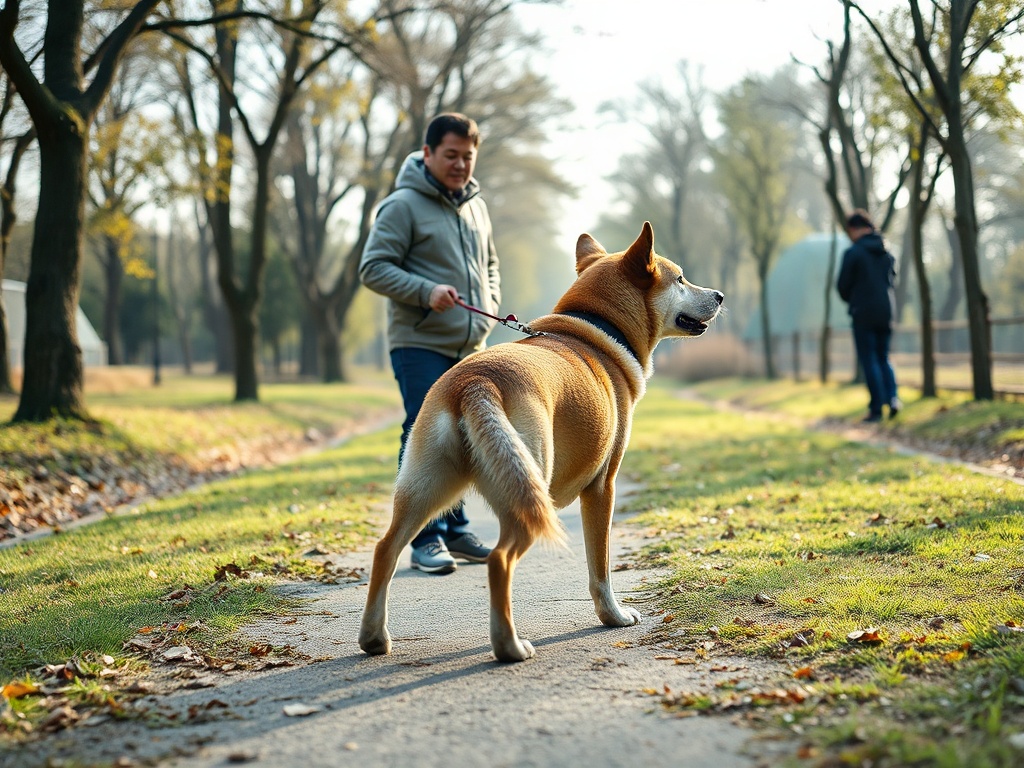
To manage a large breed effectively, you need a toolkit that prioritizes safety over aesthetics.
- Front-Clip Harness: This is the most effective tool for preventing pulling. By clipping the leash to the chest, the dog is physically turned back toward the owner when they try to pull forward.
- Fixed-Length Leash: Avoid retractable leashes for any dog over 15kg. The thin cord can cause severe friction burns, and the locking mechanism often fails under the weight of a large breed's lunge.
- Double-Ended Leash: This allows you to clip to both a harness and a collar simultaneously. It provides a 'backup' in case one piece of equipment fails.
- Muzzle Training: Even for friendly dogs, being 'muzzle-trained' is a vital safety skill. In an emergency (such as a severe injury where the dog is in pain), even the gentlest large dog may bite instinctively. Having them comfortable in a basket muzzle beforehand prevents further tragedy. emergency first aid for dogs
Conclusion and Next Steps
Training a large breed dog is a journey of managing both behavior and physics. Success is found in the balance between positive reinforcement and strict physical management. Remember these three key points:
Leverage Over Strength: Never rely on your muscles to control a large dog; use appropriate gear like front-clip harnesses and proper anchoring techniques.
Emergency Preparedness: Have a 'Plan B' for when training fails, including the Emergency U-turn and the Anchor Technique.
Consistency in Thresholds: Always work at a distance where your dog can still succeed, and never rush the process of adding distractions. Action to take today: Inspect your dog's primary walking gear. Look for any fraying in the nylon or weakness in the metal clips. If your dog is over 30kg and you are currently using a standard neck collar or a retractable leash, consider researching a high-quality front-clip harness to improve your physical control during your next walk.
Previous
Cat Litter Box Hygiene Strategies for Large Dog Households
Next
Large Breed Dog Training: Essential Methods and Safety Precautions
More in Pets

Pet First Aid Guide for Multi-Pet Households: Easy Steps for Beginners
Learn essential pet first aid tips for multi-pet households. Discover how to build a custom kit, handle choking, perform CPR, and coordinate emergencies.

Heartworm Prevention for Large Dogs: A Step-by-Step Home Guide
Heartworm prevention for large dogs requires precise dosing and consistency. Learn how to choose the right medication, manage schedules, and avoid common errors.

Introducing Two Dogs Successfully After a Failed First Attempt
Introducing two dogs requires a structured approach to prevent aggression. Follow this safety-first checklist to ensure a successful meeting and long-term peace.

Pet Birthday Party Ideas: Safety and Emergency Prep for Multi-Pet Homes
Explore pet birthday party ideas focused on safety and emergency prevention. Learn how to manage multi-pet dynamics, food risks, and stress during celebrations.