Cat Litter Box Training in Multi-Pet Homes: A Comprehensive Guide

Key Takeaways
Master cat litter box training in multi-pet households with our expert guide. Learn setup, behavioral insights, and strategies to ensure all your pets coexist peacefully.
Cat Litter Box Training in Multi-Pet Homes: A Comprehensive Guide
People who approach cat litter box training in a multi-pet household with a 'wait and see' attitude and those who proactively implement thoughtful, comprehensive strategies often end up with very different outcomes. The former may face persistent messes and escalating stress for both pets and humans, leading to frustration and potential health issues for their feline companions. In contrast, those who understand the nuances of feline behavior and the complexities of multi-pet dynamics tend to foster a harmonious home where every animal's needs are met, and litter box mishaps become a rare occurrence rather than a daily struggle. This article will guide you through understanding and effectively managing cat litter box issues, especially within the unique environment of a multi-pet household.
Understanding the Landscape of Litter Box Issues in Multi-Pet Homes
For many cat guardians, the litter box is a simple utility, but for a cat, it's a critical resource intrinsically linked to their sense of security and well-being. When you introduce other pets, whether more cats, dogs, or even small animals, the dynamics around this essential resource become significantly more complex. What might seem like a 'bad' cat choosing to eliminate outside the box is almost always a cat communicating distress, discomfort, or an unmet need. In a multi-pet household, these signals are often amplified by inter-animal stress, resource competition, and conflicting environmental preferences. Addressing these issues requires a holistic approach that considers the needs of all residents, focusing on creating an environment where each cat feels safe, secure, and has ample access to appropriate elimination sites. Failure to address these underlying factors can lead to chronic inappropriate elimination, which is one of the top reasons cats are relinquished to shelters.
This guide is designed to help you navigate these challenges, starting with foundational concepts and progressing to more advanced strategies tailored for homes with multiple animals. We'll explore everything from optimal litter box setup to understanding feline communication and managing inter-species relationships. Please remember that while this article provides general information and practical advice, it is not a substitute for professional veterinary or behavioral consultation. If your cat exhibits sudden changes in litter box habits, or if behavioral issues persist, always consult a qualified veterinarian to rule out underlying medical conditions, and consider a certified feline behaviorist for complex cases.
The Foundational Pillars of Litter Box Success (Beginner Content)
Before delving into the specific challenges of multi-pet homes, it's crucial to establish a solid foundation of best practices for litter box management. Even in a single-cat household, these principles are key to preventing problems. Neglecting any of these can easily lead to a cat seeking alternatives to their designated potty spot.
What are the Fundamental Principles of Litter Box Setup?
Setting up the ideal litter box environment involves several non-negotiable elements. These principles are universal, but their importance is magnified in homes with multiple animals.
Quantity Matters: The N+1 Rule. The golden rule for litter boxes in multi-cat households is to have 'N+1' boxes, where 'N' is the number of cats. So, for three cats, you should aim for at least four litter boxes. In a multi-pet home, this rule should ideally be extended to account for potential intimidation from other species. For example, if you have two cats and a dog, you might consider five boxes to ensure cats feel secure. This generous quantity minimizes competition and provides options if one box is occupied or perceived as unsafe.
Size and Type of Box. Most commercially available litter boxes are too small for an adult cat. A litter box should be at least 1.5 times the length of your cat from nose to tail base. Large, open litter boxes are generally preferred over covered ones, as they allow cats to feel less trapped and provide better air circulation. While covered boxes might appeal to human aesthetics or odor control, they can trap odors and make a cat feel vulnerable, especially if another pet might block the entrance. For older cats or those with mobility issues, ensure the entry lip is low enough for comfortable access, typically under 5 inches.
Litter Preference. Cats can be very particular about their litter. Most prefer unscented, soft, fine-grained clumping clay litter, as it mimics natural outdoor substrates and is comfortable on their paws. Avoid scented litters, litter deodorizers, or liners, which can be irritating or off-putting to a cat's sensitive nose and paws. If you're unsure of your cat's preference, offer two to three different types in separate boxes to let them choose. Specifically, offer one box with fine-grain clumping clay, another with a plant-based alternative like corn or paper, and a third with a silica gel crystal litter. Observe which one they use most consistently.
Strategic Placement. Location is paramount. Litter boxes should be placed in quiet, private, yet easily accessible areas throughout your home. Avoid high-traffic zones, noisy appliances (like washing machines or furnaces), or areas where they might be startled (e.g., near a door that opens suddenly). In a multi-level home, ensure there is at least one box on each floor. Crucially, do not place food and water bowls directly next to litter boxes; cats prefer to eat and eliminate in separate areas. For instance, if you have a dog, a litter box placed behind a baby gate or in a room with a cat flap can provide a safe haven away from canine interference. For more tips on creating a cat-friendly home, you might explore articles on enriching indoor environments.
Impeccable Cleanliness. Cats are fastidiously clean animals. A dirty litter box is a primary reason for inappropriate elimination. Scoop solid waste and clumps at least once, and ideally two to three times, daily. The entire litter box should be emptied, cleaned with mild, unscented soap and water, and refilled with fresh litter monthly, or every two to three weeks depending on usage. Do not use harsh chemicals or strong-smelling cleaners, as residues can deter cats. --- End of Beginner Content, Beginning of Deep Dive ---
Navigating the Complexities of Multi-Pet Environments
Once the basic litter box setup is optimized, the unique challenges of a multi-pet household come into sharper focus. This section delves into the intricate dynamics that can influence a cat's litter box behavior when other animals share their territory. Understanding these interactions is key to problem-solving.
How Do Other Pets Impact Cat Litter Box Behavior?
The presence of other animals can significantly stress a cat, leading to behavioral changes, including litter box avoidance. These impacts can be subtle or overt.
Inter-Cat Dynamics and Resource Guarding
In multi-cat homes, resource guarding is a common issue. A dominant cat might prevent a more timid cat from accessing a particular litter box or even an entire area of the home where boxes are located. This can manifest as staring, blocking, or ambushing a subordinate cat near the litter box.
- Warning: If you observe one cat consistently waiting for another near the litter box or chasing them away, this is a clear sign of resource guarding and stress. The subordinate cat is likely to seek an alternative, often inappropriate, elimination spot out of fear. To mitigate this:
- Disperse Boxes Widely: Don't cluster all litter boxes in one area. Spread them throughout the home, including different rooms and levels. Aim for boxes to be at least 5–6 feet apart, or even in separate rooms.
- Provide Multiple Escape Routes: Ensure that each litter box location offers at least two clear exits. A cat feeling trapped by another pet is less likely to use that box.
- Variety in Box Types: Offer a mix of open and covered boxes (if your cats tolerate covered ones) in different locations. Some cats might feel safer in a covered box if they perceive a threat from above, while others might prefer an open box for better visibility of their surroundings.
The Influence of Canine Companions
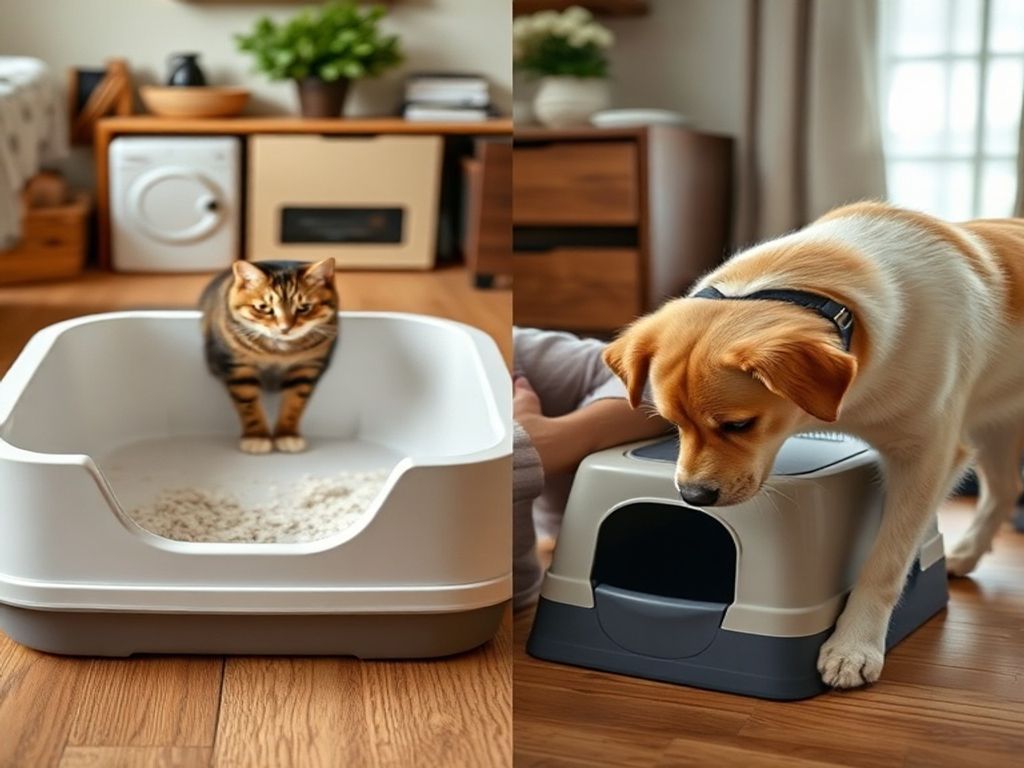
Dogs, even well-meaning ones, can inadvertently create litter box problems for cats. A dog might eat cat feces (a behavior known as coprophagia), play in the litter, or simply startle a cat while they are using the box.
- Specific Example: A 3-year-old Labrador Retriever who routinely 'investigates' the litter box can cause a sensitive Siamese cat to find alternative, more secure locations for elimination, such as laundry piles or potted plants, due to feeling threatened or having their resource contaminated. Strategies to manage dog-cat litter box interactions:
- Elevated Boxes: Place litter boxes on surfaces too high for your dog to reach, such as sturdy tables, shelves, or cat trees with large platforms. Ensure the ascent is easy for your cat.
- Cat-Flap Access: Install cat flaps on doors to rooms where litter boxes are kept, allowing only feline access. This is an effective way to create a dog-free zone for elimination.
- Baby Gates: Use tension-mounted baby gates that cats can easily jump over but dogs cannot. Some gates come with small cat doors built-in. Place these strategically to block dog access to litter box areas.
- Enclosed Furniture: Consider litter box furniture enclosures designed to look like cabinets. Ensure the entrance hole is large enough for your cat and that the interior is well-ventilated and easy to clean.
Environmental Stressors and Scent Marking
Any change in the home environment, from new furniture to a new pet, can be a source of stress for cats. Other pets might also contribute to scent marking, making a cat feel insecure.
- New Pet Introductions: When introducing a new cat or dog, do so gradually over several weeks. A sudden introduction can overwhelm existing pets and disrupt their routines, including litter box habits. Keep the new pet in a separate room initially and allow scent exchange before face-to-face meetings. You can find detailed guides on successful pet introductions for multi-species households.
- Scent Management: Regular cleaning of all pet areas is vital. If a dog has marked territory near a litter box, thoroughly clean the area with an enzymatic cleaner to eliminate the scent, which can signal competition to a cat.
- Pheromone Support: Feline pheromone diffusers (e.g., Feliway) can help reduce stress and create a calming environment, especially in multi-pet homes. Plug these into rooms where cats spend a lot of time or where litter boxes are located. Many owners report a reduction in stress-related behaviors within 2–4 weeks of consistent use. ###
Why is Medical Clearance Essential for Litter Box Issues?
Before assuming a litter box issue is purely behavioral, it is absolutely critical to rule out any underlying medical conditions. Many health problems, particularly those affecting the urinary tract, kidneys, or digestive system, can cause a cat to avoid the litter box. Pain, discomfort, or increased frequency of urination can lead a cat to associate the litter box with negative experiences.
- Common Medical Conditions: These include urinary tract infections (UTIs), bladder stones, interstitial cystitis, kidney disease, diabetes, hyperthyroidism, arthritis, and inflammatory bowel disease. A cat with arthritis, for example, might find it painful to step into a high-sided litter box or jump into an elevated one.
- First Step: Always schedule a veterinary check-up as the very first step when a cat suddenly starts eliminating outside the litter box. Your vet can perform a physical exam, urinalysis, blood tests, and potentially imaging to identify or rule out medical causes. For example, a 2011 survey published in the Journal of the American Veterinary Medical Association indicated that a significant percentage of cats exhibiting inappropriate elimination had underlying medical conditions.
Practical Steps to Re-establish Litter Box Harmony
Once you've addressed the foundational principles and considered the complex dynamics of your multi-pet home, it's time to implement a structured plan. This action-oriented section provides concrete steps you can take today to improve your cat's litter box habits.
Your Action Plan for Litter Box Success
Conduct a Litter Box Audit: Go through your home and assess every litter box based on the N+1 rule, size, type, location, and cleanliness. Be brutally honest. Are boxes truly clean? Are they easily accessible? Is there enough privacy?
Experiment with Litter: If you haven't already, offer a variety of unscented litter types in separate boxes. Give your cat a minimum of 7–10 days to show a preference before eliminating an option. Most cats eventually settle on a fine-grained, unscented clay.
Optimize Placement and Privacy: Relocate any boxes in high-traffic or noisy areas. Ensure each box has clear sightlines and multiple escape routes. Consider adding an elevated box or one in a cat-only zone using a baby gate. Remember, a cat needs to feel safe and unthreatened while vulnerable.
Manage Other Pets' Access: Implement strategies like cat flaps, baby gates, or elevated boxes to prevent dogs or other dominant cats from disturbing or guarding the litter area. Consistency is key here; a single lapse can undo weeks of training.
Thorough Cleaning of Accidents: Use an enzymatic cleaner specifically designed to neutralize pet odors on any soiled spots outside the litter box. Regular household cleaners often don't eliminate the scent completely, which can attract your cat back to the same spot. Allow the cleaner to sit for at least 15–20 minutes before blotting.
Positive Reinforcement: When your cat uses the litter box appropriately, offer immediate, calm praise or a small, high-value treat. Avoid punishment for accidents; cats do not associate punishment with the act of elimination, only with you, which can damage your bond and increase stress. Instead, focus on making the litter box the most appealing option.
Consider Feline Behaviorist Consultation: If, after 4–6 weeks of consistent implementation of these strategies, your cat is still having accidents, it's time to consult a certified feline behaviorist. They can provide personalized advice, identify subtle stressors, and develop a tailored behavior modification plan.
When to Seek Professional Help
While this guide offers a robust framework, some situations warrant immediate professional intervention:
- Sudden Onset of Issues: If your cat, previously reliable, suddenly stops using the litter box, the first call should always be to your veterinarian to rule out medical causes.
- Aggression Around Boxes: If inter-cat aggression or guarding behavior escalates, creating a dangerous environment for one or more pets, a behaviorist can help de-escalate the situation.
- Persistent Accidents: After consistently applying the recommended changes for several weeks without improvement, a professional evaluation is essential. They can offer an objective perspective and specialized techniques. General Information Disclaimer: The information provided in this blog post is for general informational purposes only and is not intended as a substitute for professional veterinary advice, diagnosis, or treatment. Always seek the advice of your veterinarian or other qualified animal health provider with any questions you may have regarding a medical condition or behavioral issue. Never disregard professional veterinary advice or delay in seeking it because of something you have read here.

Conclusion
Establishing perfect litter box habits in a multi-pet household can feel like a daunting task, but it is entirely achievable with patience, understanding, and a strategic approach. We've covered the critical importance of adhering to the 'N+1' rule for litter boxes, choosing the right type and size of box, and ensuring impeccable cleanliness. We also delved into the complex behavioral dynamics of multi-pet homes, from inter-cat guarding to canine interference, and emphasized the non-negotiable step of ruling out medical conditions with your veterinarian.
Your specific action today is to conduct a thorough litter box audit in your home, assessing quantity, size, type, location, and cleanliness for every single box. Identify at least one area for immediate improvement – perhaps adding an extra box, relocating one to a quieter spot, or upgrading to a larger size – and implement that change within the next 24 hours. By taking this proactive step, you're setting the stage for a more harmonious and accident-free home for all your beloved pets.
Previous
Preparing for Your Senior Dog's First Day: A Comprehensive Guide
Next
Managing Cat Kidney Health: Essential Checklist for Pet Parents
More in Pets

Pet First Aid Guide for Multi-Pet Households: Easy Steps for Beginners
Learn essential pet first aid tips for multi-pet households. Discover how to build a custom kit, handle choking, perform CPR, and coordinate emergencies.

Heartworm Prevention for Large Dogs: A Step-by-Step Home Guide
Heartworm prevention for large dogs requires precise dosing and consistency. Learn how to choose the right medication, manage schedules, and avoid common errors.

Introducing Two Dogs Successfully After a Failed First Attempt
Introducing two dogs requires a structured approach to prevent aggression. Follow this safety-first checklist to ensure a successful meeting and long-term peace.

Pet Birthday Party Ideas: Safety and Emergency Prep for Multi-Pet Homes
Explore pet birthday party ideas focused on safety and emergency prevention. Learn how to manage multi-pet dynamics, food risks, and stress during celebrations.