Korean Rice Soup Guide: How to Cook Gukbap at Home Fast
Key Takeaways
Learn how to cook various Korean rice soup (Gukbap) types at home. This guide offers time-saving tips and authentic flavor secrets for busy office workers.
Korean Rice Soup Guide: How to Cook Gukbap at Home Fast
The short answer is that you can recreate authentic Korean rice soup (Gukbap) at home by focusing on high-quality broth concentrates and specific aromatic seasonings like perilla powder and salted shrimp. Here's why. While traditional restaurants might spend 12 to 24 hours simmering bones to achieve a milky consistency, modern culinary shortcuts—such as pressure cookers and pre-made bone marrow extracts—allow you to achieve a 90% flavor match in under 30 minutes. By mastering the assembly of the 'Dadaegi' (spicy seasoning paste) and selecting the right toppings, any busy professional can enjoy this soul-warming meal without the historical labor requirements.
Please note that the following information is for general educational purposes and culinary inspiration only. It does not constitute nutritional, medical, or dietary advice. If you have specific health conditions or dietary restrictions, please consult with a qualified health professional or nutritionist before making significant changes to your diet.
Why Is Authentic Gukbap Difficult for Busy Professionals?
For many office workers, the craving for a steaming bowl of Gukbap usually hits after a high-stress day or a late-night session at the office. However, the barrier to entry for home cooking is often the perceived time commitment. Traditionally, Gukbap is not just a 'soup' but a labor-intensive project. For example, 'Dwaeji-gukbap' (pork rice soup) requires soaking pork bones for 5 hours to remove blood, followed by a primary boil and a secondary long-term simmer. For someone finishing work at 7 PM, this is simply not a viable Tuesday night activity.
Furthermore, the smell of boiling bones can permeate a small apartment for days, which is a significant deterrent for urban dwellers. According to a 2023 report on South Korean food trends by the Korea Agro-Fisheries & Food Trade Corp, over 65% of single-person households now prefer 'Home Meal Replacements' (HMR) specifically for labor-intensive traditional dishes. The challenge lies in moving beyond the mediocre flavor of basic instant kits and elevating them into something that feels like a real meal.
In my experience of reducing meat consumption over the last 2 years, I have also found that finding plant-based alternatives for these deep, collagen-rich broths is particularly difficult. The 'mouthfeel' of a traditional bone broth is hard to replicate with just vegetable stock, but it is not impossible if you understand the chemistry of fats and umami. Whether you are looking for a meat-heavy classic or a lighter vegetable version, the strategy remains the same: focus on the finishing touches rather than the starting boil.
What Are the Most Popular Types of Gukbap?
Before you start cooking, it is essential to understand the different profiles of Gukbap. Not all rice soups are created equal, and your choice will dictate your shopping list and prep time.
Dwaeji-gukbap (Pork Rice Soup)
Originating from Busan, this is perhaps the most iconic version. It features a rich, milky pork broth and thin slices of pork shoulder or belly. The key to this dish is the 'Bootsu-muchim' (seasoned chives) added at the very end. The acidity and spice of the chives cut through the heaviness of the pork fat.
Sogogi-muguk (Beef and Radish Soup)
This is the 'cleanest' version of Gukbap. It uses a clear beef broth flavored with large chunks of Korean radish (Mu). It is significantly easier to make at home because it does not require the 'milky' bone emulsion. Specifically, using beef brisket or flank steak provides enough flavor in just 40 minutes of simmering.
Sundae-guk (Blood Sausage Soup)
This is a favorite for those who enjoy variety in texture. It includes 'Sundae' (Korean blood sausage) and various organ meats. The broth is usually a mix of pork bone and aromatics. At home, this is best made using high-quality frozen Sundae, which can be steamed and added to a generic pork broth base.
Kongnamul-gukbap (Bean Sprout Rice Soup)
This is the ultimate 'hangover cure' and the most accessible for those seeking a lighter or vegetarian-adjacent option. It relies on a base of dried anchovy and kelp (Dashima) broth. It is crisp, refreshing, and can be prepared from scratch in about 20 minutes.
How Can You Recreate the Restaurant Taste at Home?
To bridge the gap between a bland home soup and a professional restaurant bowl, you need to apply specific 'cheat codes.' These are the elements that provide the depth of flavor usually reserved for 24-hour simmered pots.
- Use Salted Shrimp (Saeujeot): Never use regular table salt to season your Gukbap. Salted shrimp provides both salinity and fermented umami that salt cannot match.
- The Power of Perilla Powder (Dealkkae-garu): Adding 2 tablespoons of toasted perilla powder to a pork-based soup instantly thickens the texture and adds a nutty, earthy depth.
- Master the Dadaegi: This is the spicy paste made from Gochugaru (red chili flakes), minced garlic, soy sauce, and a splash of the broth itself. Letting this paste sit for 10 minutes before adding it to the soup allows the flavors to hydrate and meld.
- Temperature Control: Restaurants serve Gukbap in 'Ttukbaegi' (earthenware pots) that keep the soup at a near-boil throughout the meal. If you don't have one, pre-heat your ceramic bowl with hot water before adding the soup.
- The Rice Ratio: Use a 1:1.5 ratio of rice to soup. Too much rice will soak up the broth and turn the meal into a thick porridge within 5 minutes.
Example: The 15-Minute Office Worker Special
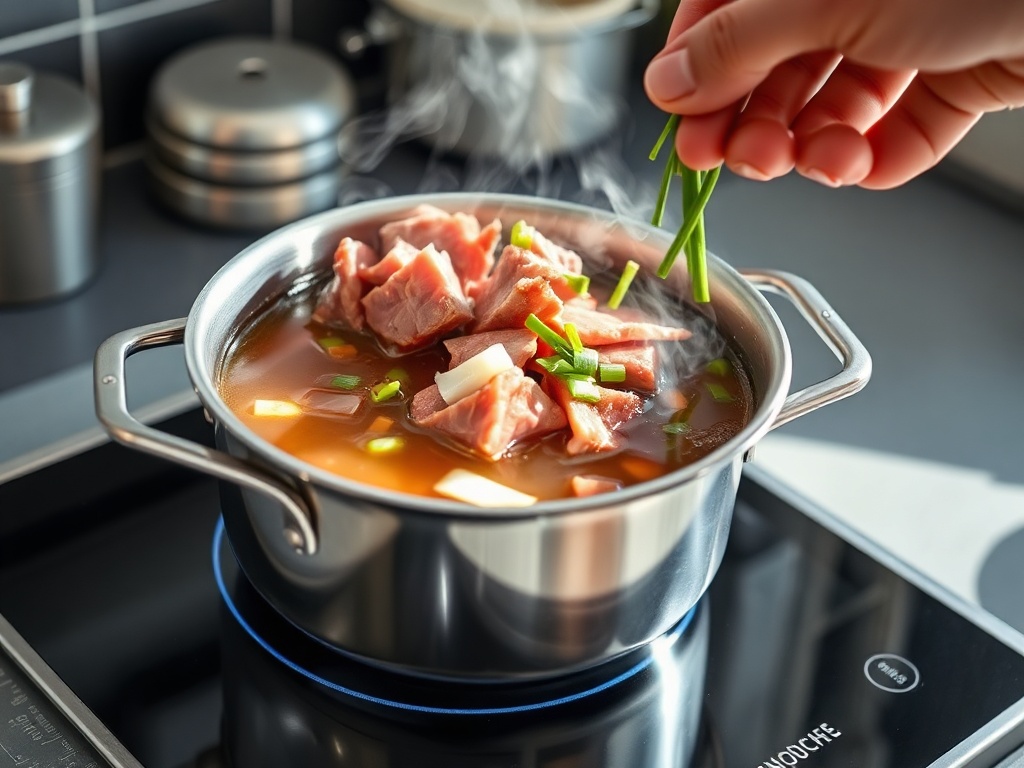
In practice, you can use a high-quality store-bought 'Sa-gol' (bone broth) pouch. Heat the pouch, add 100g of thinly sliced pre-cooked pork (often sold in the deli section), and a handful of chopped scallions. The secret is adding half a teaspoon of minced ginger and a teaspoon of fish sauce. This removes the 'processed' smell of the packaged broth and gives it a fresh, homemade kick.
Critical Caveats: When This Advice Might Fail
While the shortcuts mentioned above are effective, there are situations where they will not yield the desired results. It is important to recognize these limitations before you start.
The Quality of the Base: If you use a bottom-tier, powdered broth base that contains mostly MSG and artificial flavorings, no amount of perilla powder will save it. Look for 'refrigerated' bone broth pouches rather than shelf-stable powders for a better texture.
Rice Texture Issues: If you use freshly cooked, high-moisture 'new crop' rice, it will disintegrate immediately in the soup. This creates a cloudy, starchy mess. If you only have fresh rice, let it sit on the counter for 10 minutes to steam off and firm up before adding it to the broth.
Over-Seasoning with Saeujeot: Salted shrimp is incredibly potent. A common mistake is adding a full tablespoon at once. Always start with half a teaspoon, stir, and taste. The saltiness intensifies as the soup stays hot. [essential Korean pantry staples]
Decision Criteria for Your Gukbap Method
How should you decide which method to use? Consider these two main criteria:
Criteria 1: Time vs. Authenticity
If you have 20 minutes, choose the Bean Sprout (Kongnamul) or a Broth-Pouch hack. You will get 80% of the satisfaction with 5% of the effort. If you have a weekend and want the 100% authentic experience, invest the 12 hours into a proper bone simmer. In my experience, the 'middle ground' of boiling bones for only 2 or 3 hours often results in a thin, disappointing broth that isn't worth the cleanup.
Criteria 2: Dietary Goals (Meat vs. Plant-Forward)
If you are trying to reduce meat, the Sogogi-muguk (Beef and Radish) is actually the hardest to replicate because the radish relies so heavily on the beef fat for flavor. Instead, go for the Kongnamul-gukbap. You can use a 'Yondu' (vegetable umami seasoning) or a strong kelp-based broth. It feels naturally light rather than like a 'missing' version of a meat dish.
[meal prep strategies for professionals]
What Readers Often Miss: The Importance of 'Toteulgi'
In traditional Gukbap restaurants, there is a technique called 'Toteulgi.' This involves pouring the hot broth over the cold rice in the bowl, then pouring it back into the pot, and repeating this 3 to 5 times.
Why do they do this? It's not just for show. This process warms every single grain of rice to the core and coats it in a thin layer of fat/starch without overcooking it. When you just dump rice into a boiling pot, the outside of the grain gets mushy while the inside stays cold. If you have an extra 2 minutes at home, try the 'Toteulgi' method using a ladle. It significantly improves the mouthfeel of the dish.
First Step to Take Today
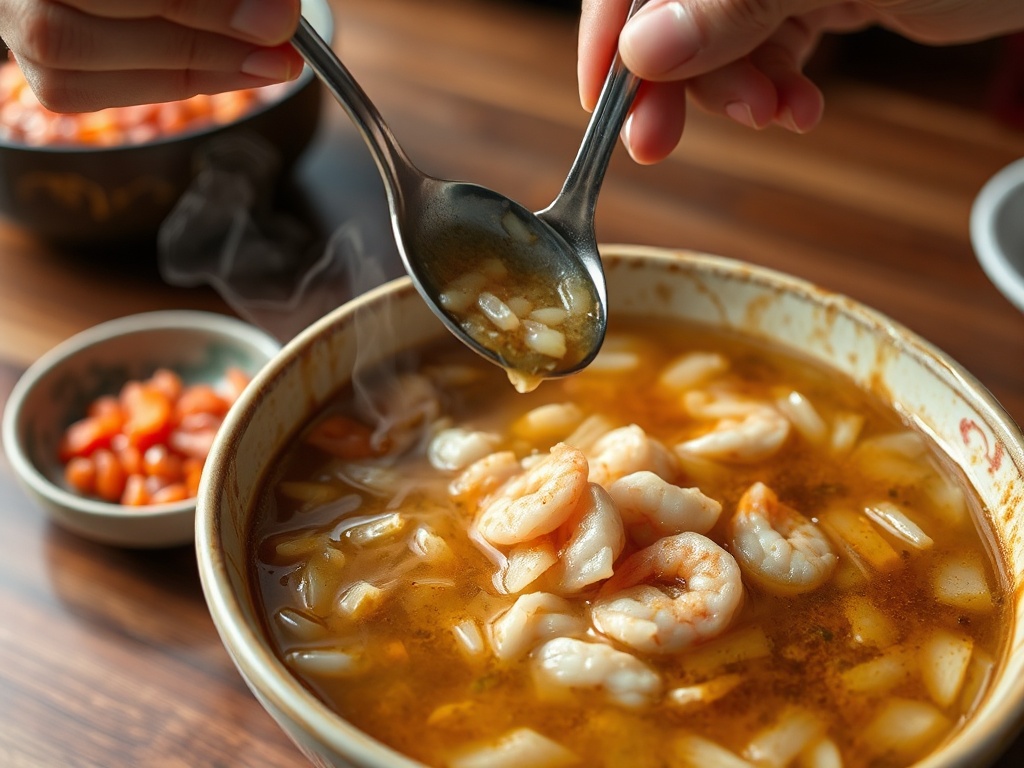
The single most accessible action you can take is to purchase a jar of salted shrimp (Saeujeot) and a bag of coarse Gochugaru. These two ingredients are the foundation of almost every Gukbap variety. Even if you are just eating a simple bowl of store-bought soup tonight, adding a tiny bit of salted shrimp will immediately elevate the flavor profile closer to a professional kitchen.
Summary of Key Points
- Shortcuts work: You don't need 24 hours; use high-quality broth concentrates and fresh aromatics like ginger and scallions to fix the 'packaged' taste.
- Seasoning is everything: Use salted shrimp for salt and perilla powder for thickness. Never rely on plain salt alone.
- Manage your rice: Use day-old rice or 'Toteulgi' (pouring broth over rice multiple times) to ensure the texture remains firm and the soup remains clear. Your Action Plan: Tomorrow, on your way home from work, stop by a local market and buy a pre-cooked bone broth pouch and some fresh chives. Try the 15-minute 'hack' mentioned above and see if it satisfies your craving. If the flavor is still too thin, verify the ingredient list on your broth pouch—it should list 'bone extract' as the primary ingredient, not 'water and salt.'
Previous
Doenjang Recipe Variations for Large-Scale Vegetarian Meal Prep
Next
Korean Rice Soup Guide: How to Cook Gukbap at Home Fast
More in Recipes
Easy 5-Ingredient Pork Suyuk: The Ultimate High-Protein Diet Recipe
Discover a simple 5-ingredient Korean boiled pork (Suyuk) recipe that takes just 50 minutes. Perfect for a high-protein, low-calorie diet that keeps you full.
Tofu Kimchi Recipe: Quick Ways to Use Fridge Leftovers
Learn a simple Tofu Kimchi recipe to clear out your fridge. Discover freezer-friendly meal prep tips, common beginner mistakes, and quick cleanup hacks.

Vegetarian guest hosting recipes you can prep on weekends
Vegetarian guest hosting recipes made easy. Learn how to prep plant-based dishes on weekends, freeze them safely, and master smart ingredient substitutions.

How to Bake Bread in a Small Kitchen with Minimal Cleanup
Learn how to bake homemade bread in a small kitchen with minimal cleanup. This guide covers no-knead methods, diet-friendly tips, and office lunch ideas.